News

How PT100 Sensors Improve Heat Meter Accuracy?

How PT100 Sensor Tolerance Impacts Heat Meter Accuracy In the heat metering industry, accuracy is not just a technical specification. It directly affects billing fairness, regulatory compliance, customer trust, and long-term operating cost. A small temperature deviation inside a heat meter can create large cumulative energy calculation errors over thousands of installations. This is why professional buyers increasingly focus on one component that is often underestimated: the PT100 temperature sensor. Many heat meter projects fail to reach stable long-term accuracy not because of the electronics or flow section, but because the wrong sensor tolerance, poor matching consistency, or unstable assembly
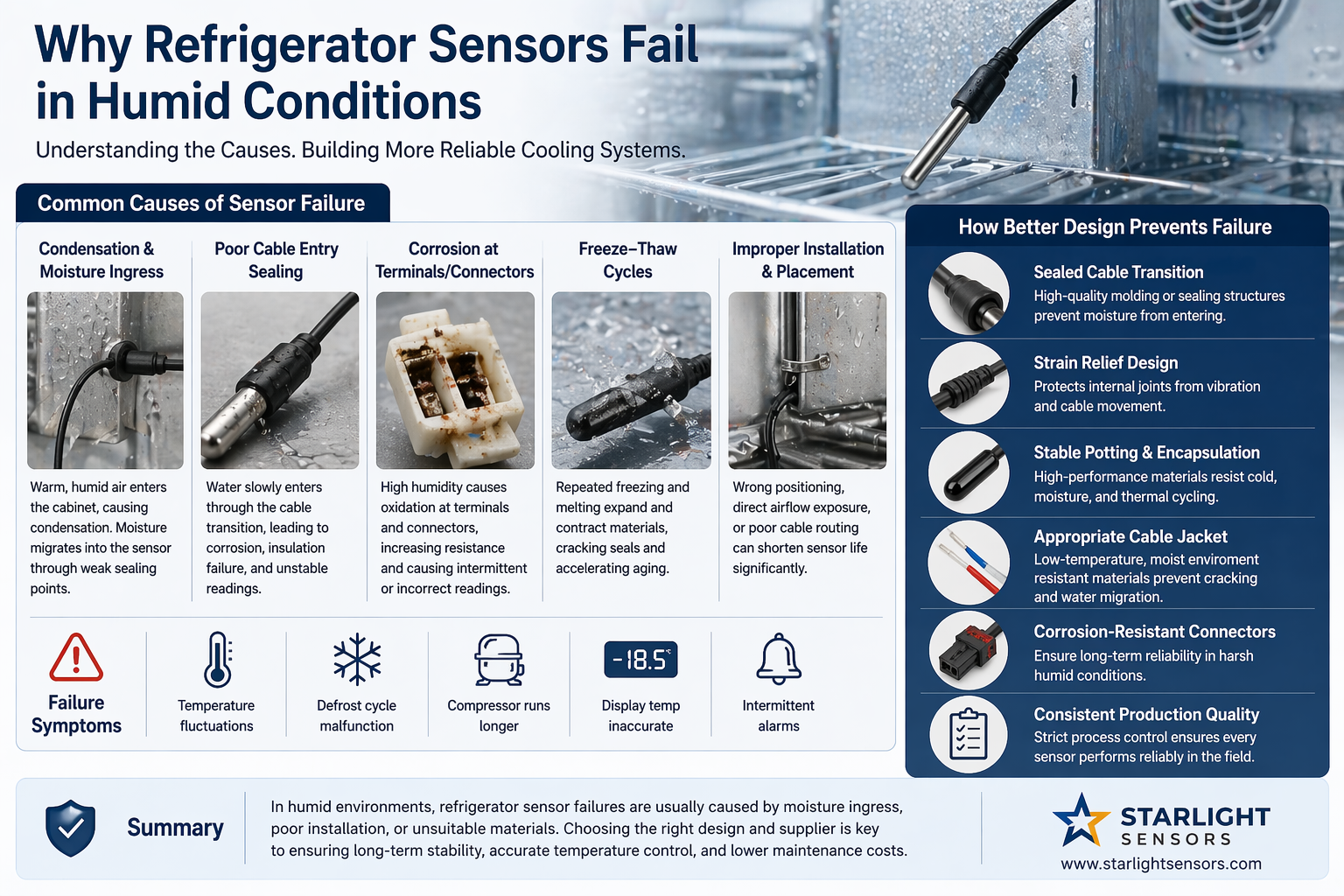
Why Refrigerator Sensors Fail in Humid Conditions?

When refrigerator temperature sensors fail, many people assume the sensor itself was poor quality. In reality, that is often only part of the story. In humid operating environments, failure is frequently caused not by the sensing element, but by moisture entering places where it should never reach. This is especially common in commercial refrigeration, supermarket display cabinets, cold rooms, beverage coolers, ice machines, and tropical or coastal markets where humidity remains high for long periods. In these environments, temperature sensors face a combination of condensation, water ingress, freeze-thaw cycles, and cable stress that can gradually destroy performance. Many engineers replace

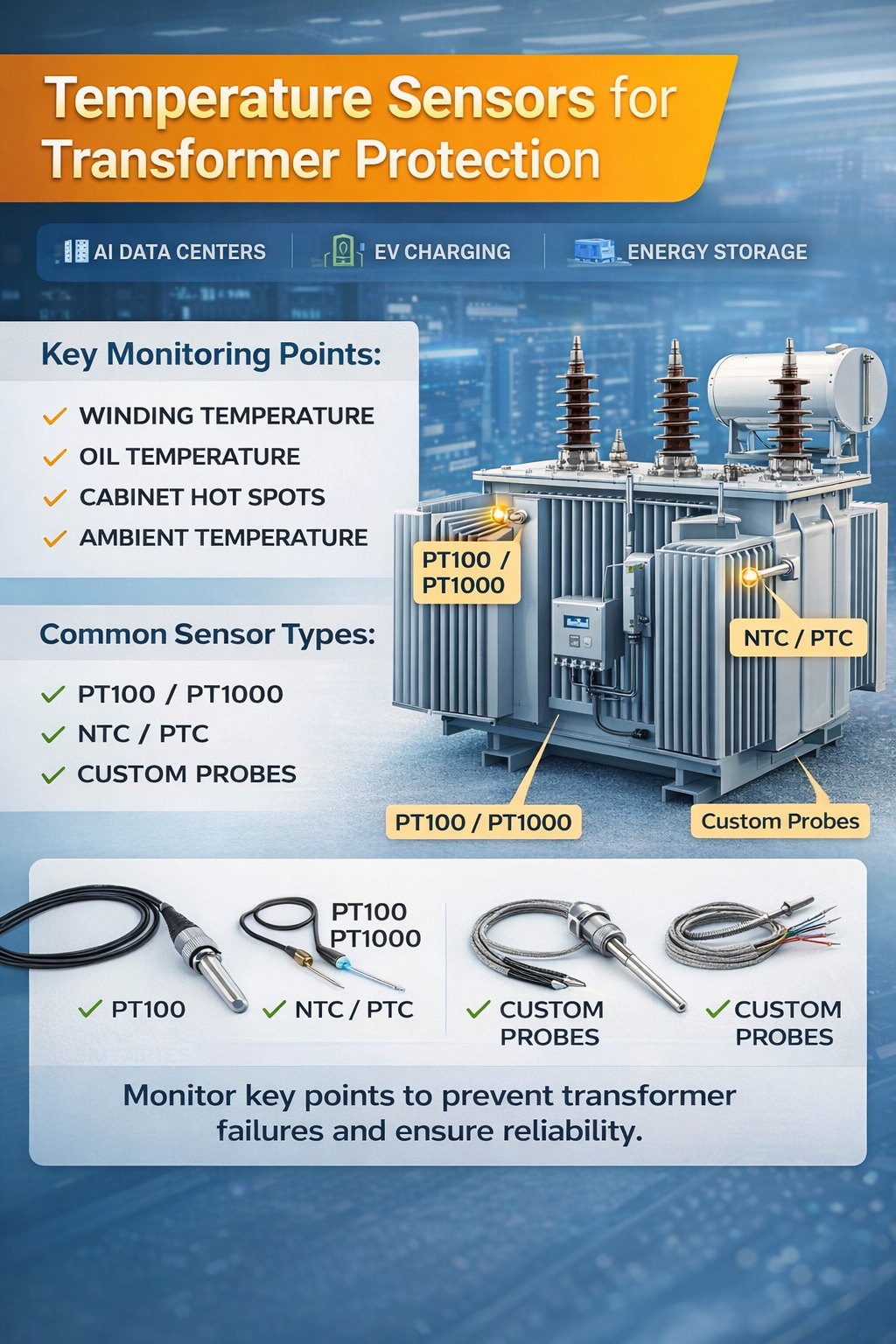
How Temperature Monitoring Prevents Transformer Failure?

Power transformers are among the most important assets in electrical systems. They are widely used in factories, commercial buildings, substations, renewable energy projects, AI data centers, EV charging stations, and industrial plants. When a transformer fails, the result can be costly downtime, damaged equipment, and serious operational disruption. One of the most common causes of transformer failure is excessive heat. In many cases, overheating develops slowly over time and remains unnoticed until major damage has already occurred. This is why temperature monitoring has become one of the most effective ways to protect transformers and extend service life. As electrical demand

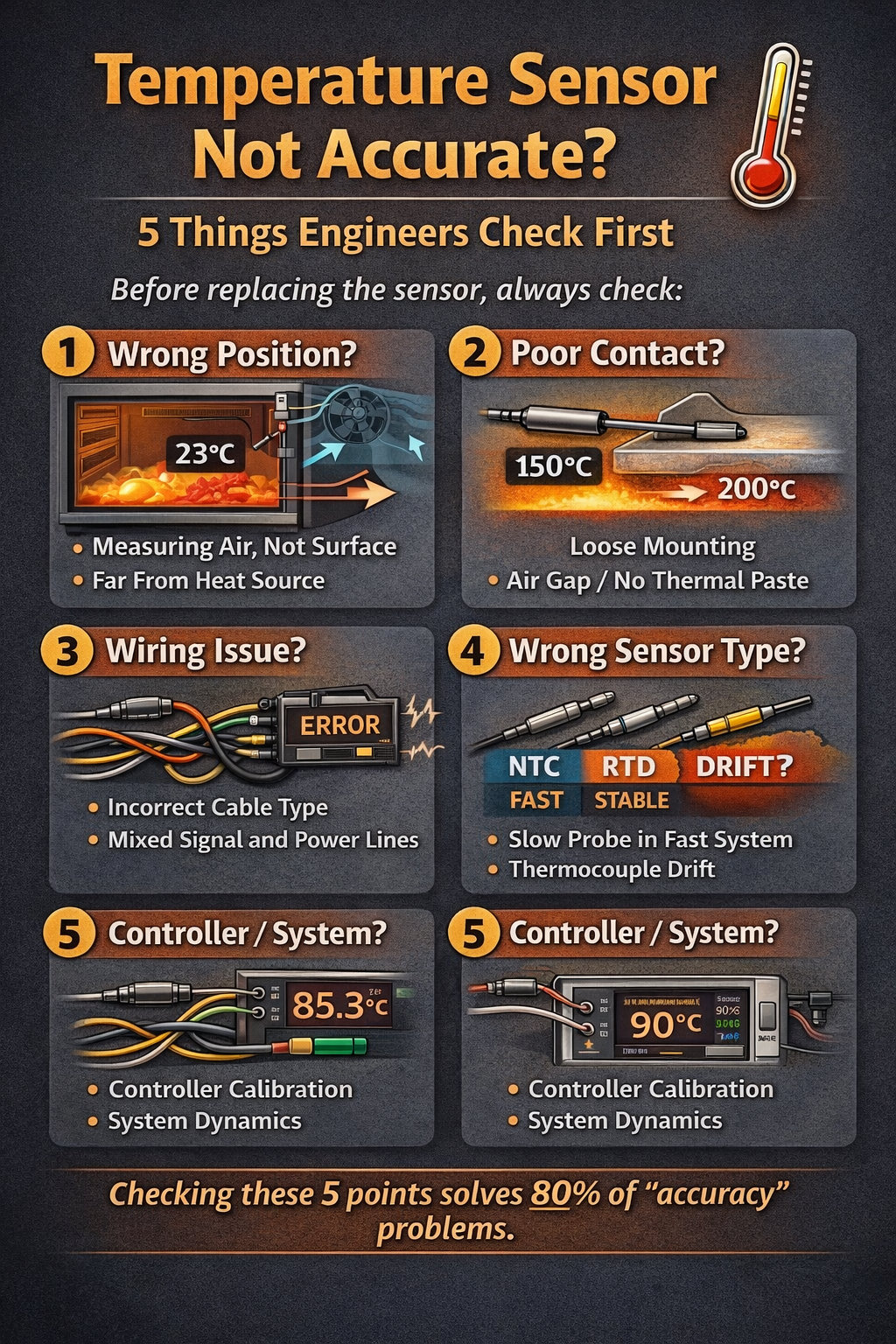
Temperature Sensor Not Accurate? 5 Things Engineers Check First

In many temperature measurement applications, one of the most common complaints is simple: “The temperature sensor is not accurate.” From HVAC systems to industrial ovens, from coffee machines to refrigeration units, this issue comes up again and again. The usual reaction is to replace the sensor. But in real engineering practice, experienced engineers rarely do that first. Because in most cases: The sensor is not the problem — the application is. If a temperature reading looks wrong, there are several factors that should be checked before assuming the sensor itself is defective. This article walks through the five most common

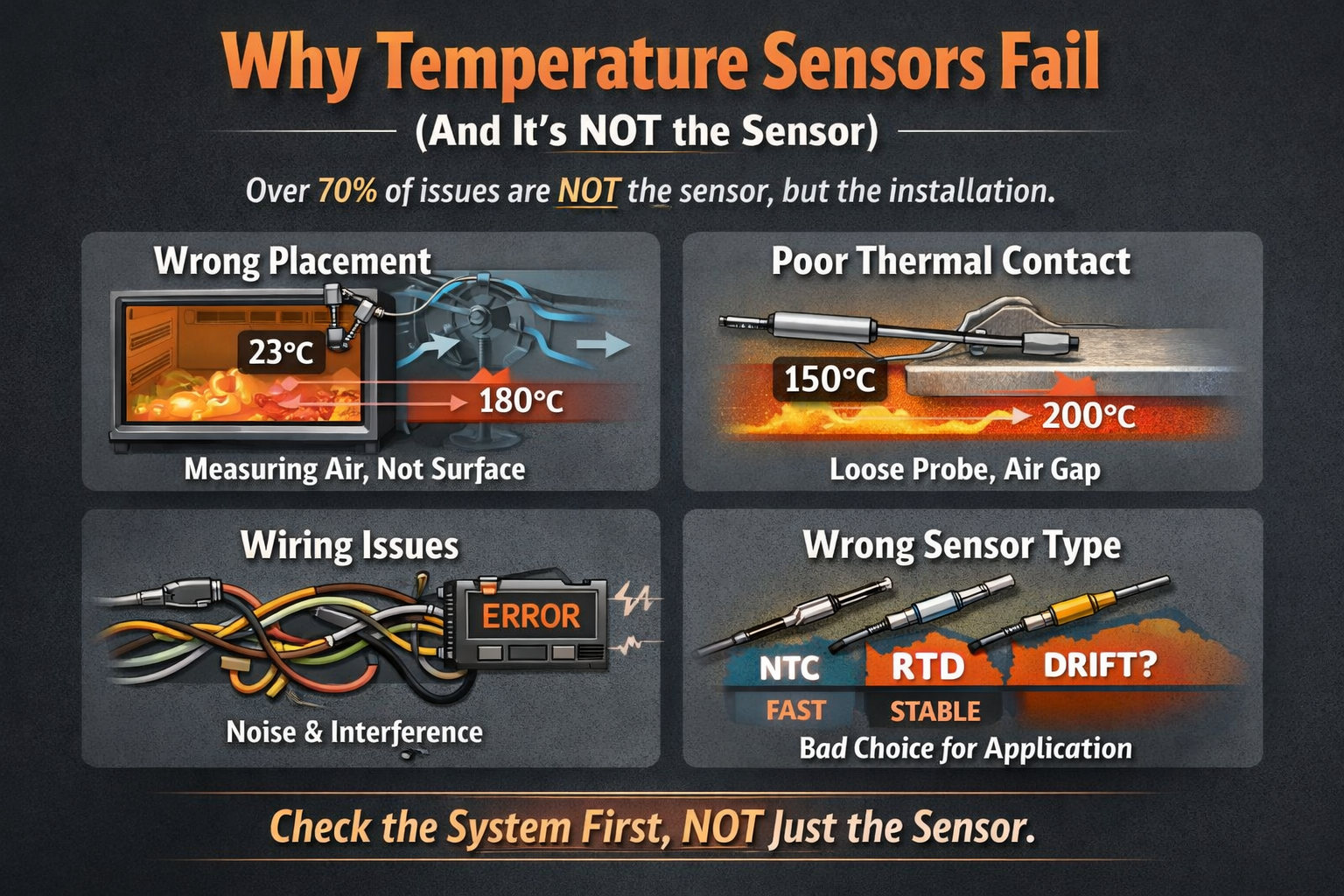
Why Temperature Sensors Fail in Real Applications (And It’s Not Always the Sensor)

In many projects, when temperature readings become unstable or inaccurate, the first reaction is almost always the same: “There must be something wrong with the sensor.” From a supplier’s side, we hear this almost every week. But after checking dozens of real cases — from ovens to HVAC systems to coffee machines — the conclusion is surprisingly consistent: In most cases, the sensor is working exactly as designed. The problem comes from how it is used. Temperature measurement is not just about the sensor itself.It is a combination of installation, thermal conditions, wiring, and system design. If any part of

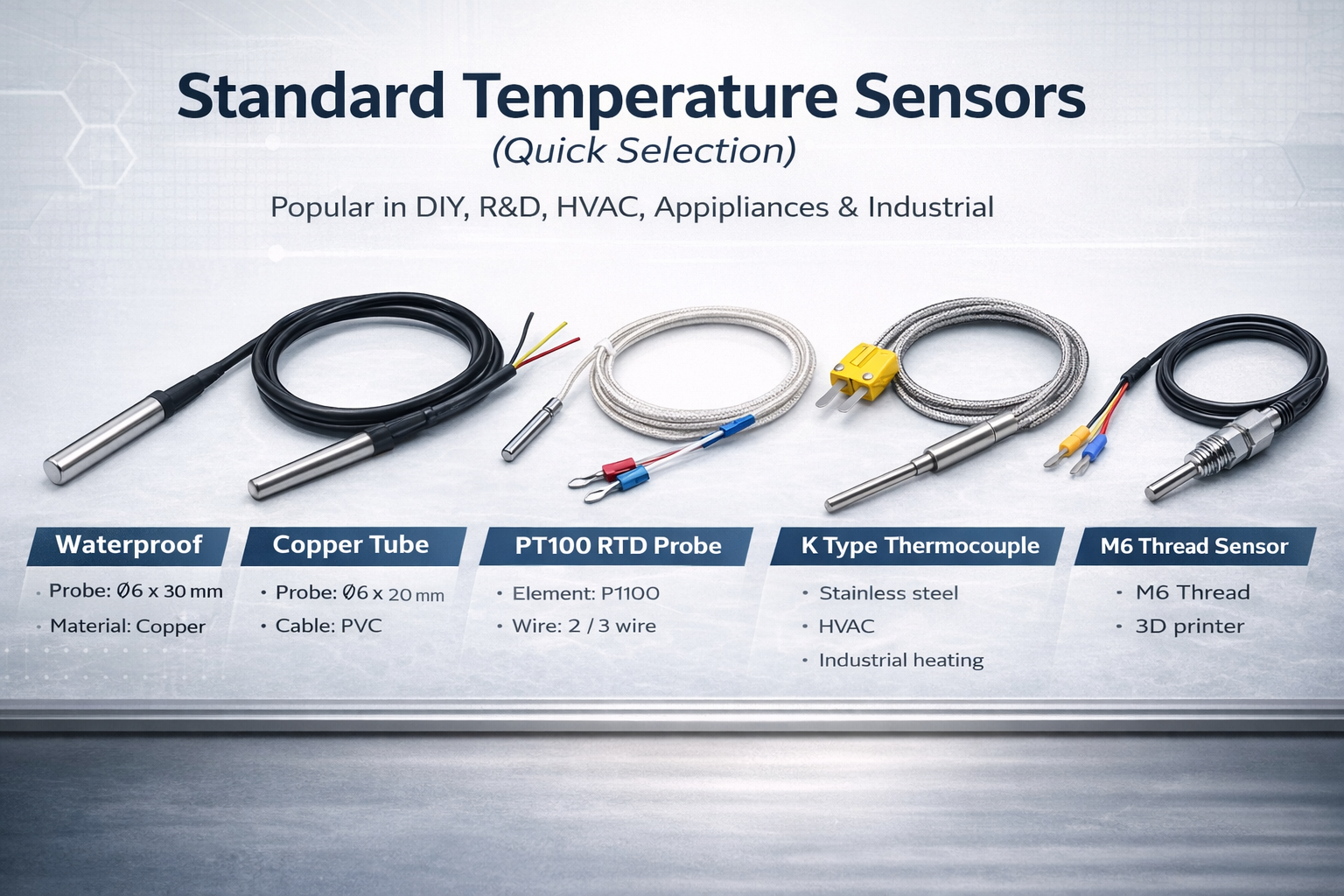
Temperature Sensor for Oven: Principles, Applications, and Reliable Measurement Methods

Temperature control is the foundation of any oven-based process. Whether used in food production, laboratory research, electronics manufacturing, or industrial heat treatment, ovens rely on stable and accurate temperature measurement to maintain consistent results. At the center of this control system is the temperature sensor for oven environments. This sensor continuously monitors the internal temperature of the chamber and provides feedback to the controller, ensuring that heating elements operate within the required range. Selecting the right oven temperature sensor is essential for improving measurement stability, energy efficiency, and long-term equipment reliability. This article explains how oven temperature sensors work, where

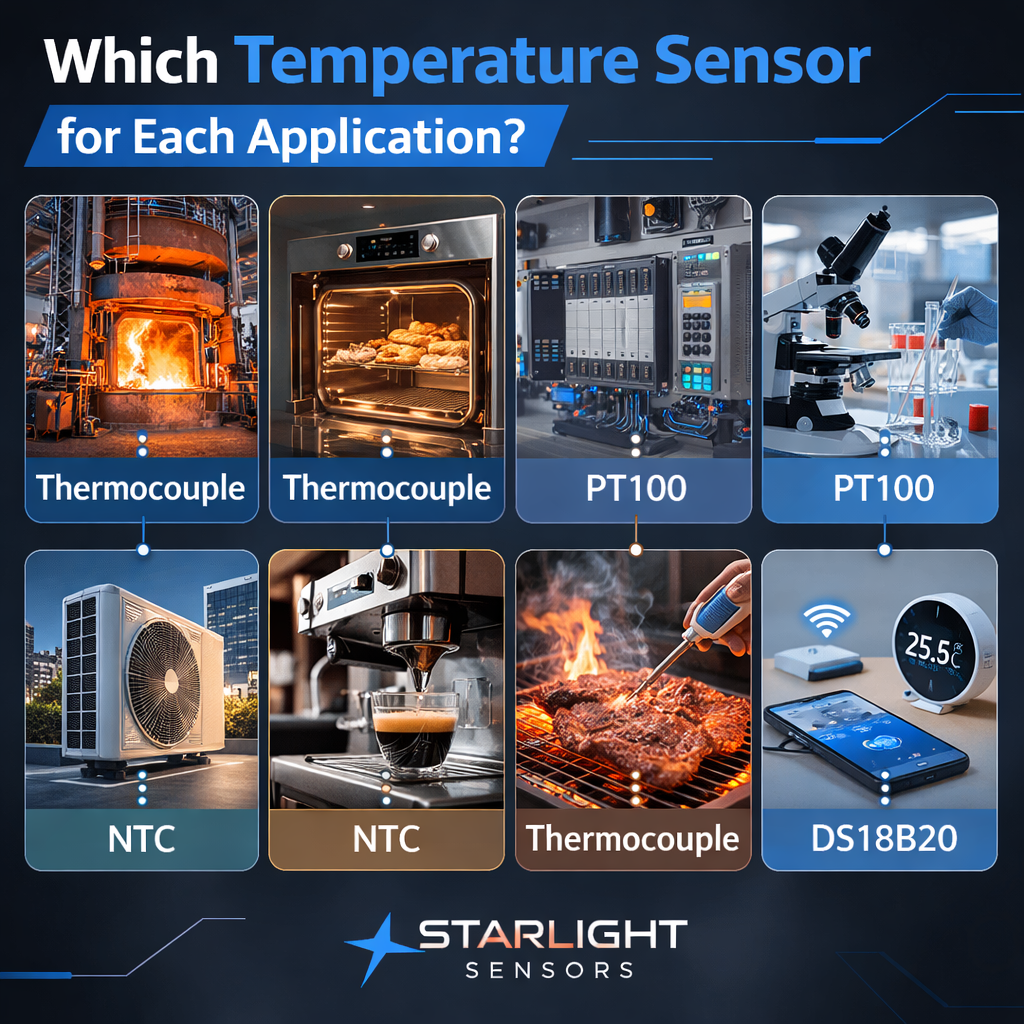
Thermocouple vs RTD: Which Temperature Sensor Is Better?

Temperature measurement is essential in many industrial and commercial applications. Two of the most widely used temperature sensors are thermocouples and RTD sensors (Resistance Temperature Detectors). Engineers and buyers often ask the same question: Thermocouple vs RTD — which temperature sensor should you choose? Understanding the difference between these two technologies helps ensure accurate temperature measurement, longer sensor life, and better performance for your application. What Is a Thermocouple? A thermocouple is a temperature sensor made by joining two different metal wires together. When the junction of these two metals is exposed to heat, a small voltage is generated. This

Why Temperature Sensors Drift Over Time | RTD, Thermocouple & NTC Guide

In industrial systems, temperature sensors are expected to provide accurate measurements for many years. However, engineers sometimes observe that readings gradually change even when the actual temperature remains constant. This phenomenon is known as sensor drift. Sensor drift can affect various sensing technologies, including RTD temperature sensors, thermocouples, and NTC thermistors. Understanding why drift occurs helps engineers select more reliable sensors and reduce long-term maintenance costs. What Is Temperature Sensor Drift? Temperature sensor drift refers to a gradual change in sensor output over time while the real temperature remains unchanged. For example, a PT100 temperature sensor calibrated at 100 °C

What Makes PT Sensors Manufacturer Solutions Stand Out in Heat Meter Applications

Introduction: PT sensors for heat meters offer ±0.1°C accuracy, customizable designs, automated quality control, and compliance with CJ 128-2007 and EN 1434 standards for reliable thermal measurement.   In a bustling energy monitoring facility, technicians rely on precise instruments every day — especially when it comes to tracking heat consumption accurately. PT sensors play a pivotal role in these systems, translating subtle temperature variations into data that informs billing and efficiency decisions. For those engaged in heat meter applications, having a pt sensors suppleir offering not only precision but also reliability and tailored solutions can make a significant difference. These sensors

Exploring the Role of Platinum Resistance Temperature Sensors in Medical Equipment

Introduction: Pt sensors provide ventilators with temperature accuracy within ±0.1°C, ensuring stability, safety, and reliability in critical medical environments.   In busy hospital environments, precise temperature control can be a matter of life and death, especially when dealing with sensitive medical equipment like ventilators. Temperature inconsistencies may lead to compromised treatment or equipment failure. That’s where pt sensors play a critical role, providing dependable and accurate temperature readings. Suppliers of these sensors have evolved their products to meet stringent medical standards, ensuring patients receive the best care possible. With pt sensors from a trusted pt sensors suppleir, medical devices maintain stability,

Shopping Cart
Scroll to Top
Scroll to Top