
-
-
-
-
-
Sale!
-
-
NTC Thermistor
Starlight, a trusted NTC supplier, provides high-quality NTC thermistors designed for accurate temperature measurement across diverse applications. These thermistors combine advanced materials that respond sensitively to temperature changes, ensuring precise and fast readings.
Industries and consumer electronics manufacturers rely on NTC thermistors for their stability, reliability, and cost-effectiveness. Their compact size and wide selection of configurations make them easy to integrate into new or existing systems. Whether used in HVAC equipment, automotive systems, or industrial machinery, NTC thermistors deliver dependable performance in demanding environments.
As a leading NTC thermistor manufacturer in China, Starlight offers products that are simple to install, energy-efficient, and available in a variety of styles, including radial lead, chip, bead, and probe types. These sensors meet the needs of professionals seeking consistent temperature monitoring and long-term durability.
Types of NTC thermistors
-
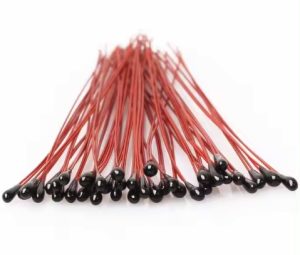
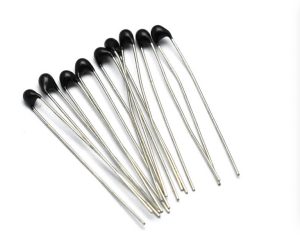
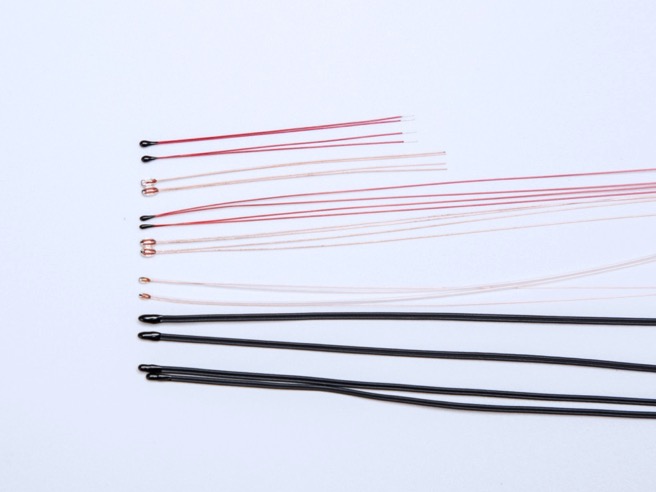
Radial Lead NTC Thermistors: NTC sensing elements with leads extending from the same side of the body. Radial lead arrangement does not by itself specify glass or epoxy encapsulation; confirm the coating, dimensions and assembly method for the selected part.
-
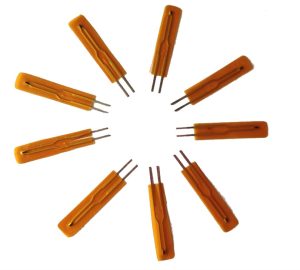
Chip NTC Thermistors: Small, surface-mount designs found in electronic devices that require precise temperature sensing.
-
Bead NTC Thermistors: Embedded in plastics or metals. Moreover, they often serve automotive and industrial applications.
-
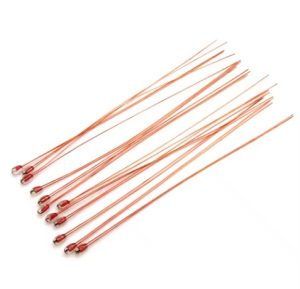
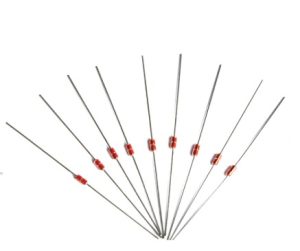
Glass-Encapsulated Axial Lead Thermistors: Suitable for high-temperature environments such as ovens, heaters, and machinery.
-
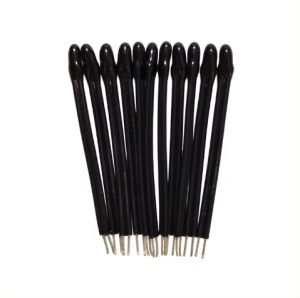
Epoxy-Coated Thermistors: Compact coated sensing elements. Suitability for humidity, outdoor exposure or immersion depends on the coating and complete assembly design and must be validated for the intended environment.
-
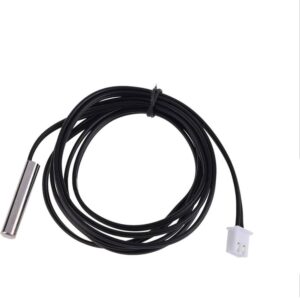
Probe NTC Thermistors: NTC elements packaged in a probe assembly. Suitability for a liquid or gas depends on the housing, seal, cable and installation conditions; confirm material compatibility and any immersion or pressure requirements for the exact assembly.
The right thermistor depends on the specific temperature sensing needs of each application.
FAQ
Q: How does an NTC thermistor work?
An NTC thermistor reduces its resistance as temperature increases.
Q: What are the advantages of using NTC thermistors?
These sensors offer high sensitivity, fast response times, and low cost. Furthermore, they are easy to install.
Q: What are the applications of NTC thermistors?
Industries use them in air conditioning, refrigerators, heaters, and automotive systems.
Q: What is the accuracy of NTC thermistors?
NTC accuracy depends on the resistance–temperature characteristic, component tolerances and complete measurement system. Resistance tolerance is not the same as temperature accuracy. Define the required temperature error over your operating range, then confirm the R/T data, tolerances and validation conditions for the selected part.
Q: How do you select an NTC thermistor?
Consider the desired temperature range, accuracy, response time, and environment.
Q: What is the operating temperature range for NTC thermistors?
The operating range is specific to the selected NTC element and finished assembly. Housing, sealing material, cable insulation and termination can impose different limits. Confirm the continuous operating range and any short-duration exposure against the approved datasheet and assembly drawing.
Q: Can NTC thermistors measure humidity?
While they do not measure humidity directly, you can combine them with other sensors for this purpose.
NTC Thermistor Selection and OEM Inquiries
Compare our MF52B NTC thermistor with enameled wire and NTC 10K B3950 waterproof temperature probe for different component and probe configurations. Confirm the required resistance, B value, tolerances and operating conditions against your controller and installation requirements.
For an OEM inquiry, please share the application, resistance reference temperature, required resistance and B value, tolerances, operating temperature range, dimensions, cable and connector requirements, and estimated quantity. Include a drawing or sample reference if available. Request an NTC thermistor or temperature probe quote with your project details.