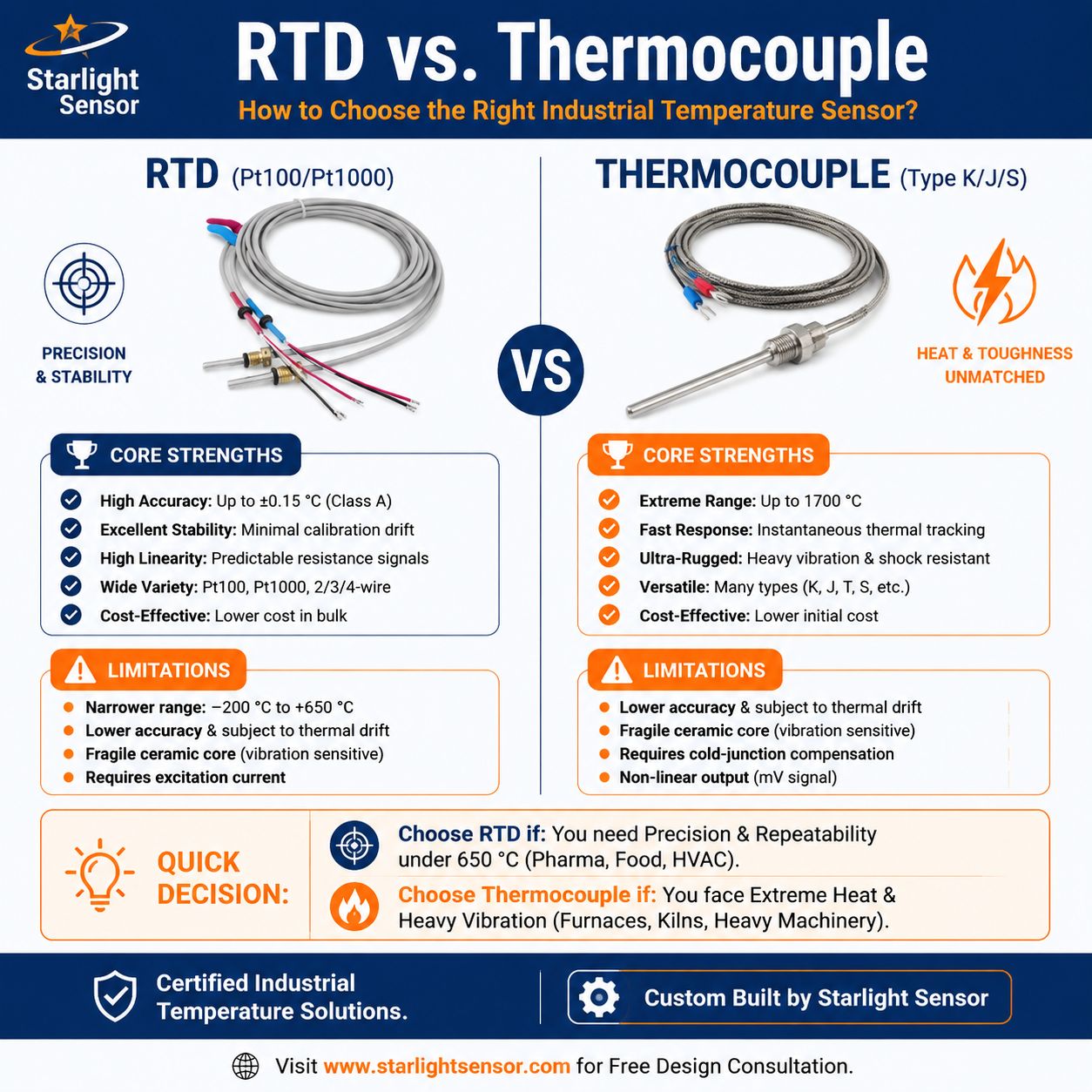
What Does PT100 IEC 60751 Mean?
PT100 is a platinum resistance temperature sensor whose nominal resistance is 100 Ω at 0 °C. IEC 60751:2022 is the current IEC publication for industrial platinum resistance thermometers and platinum temperature sensors, including the resistance–temperature relationship and requirements. The standard defines sensor behavior; it does not by itself specify every finished probe’s sheath, fitting, cable, connector, or process suitability.
PT100 RTDs and NTC thermistors both convert temperature into a resistance change, but they use different sensing materials and resistance curves. Select the technology and the complete assembly for the required temperature span, accuracy, response, circuit, installation, and lifecycle needs.
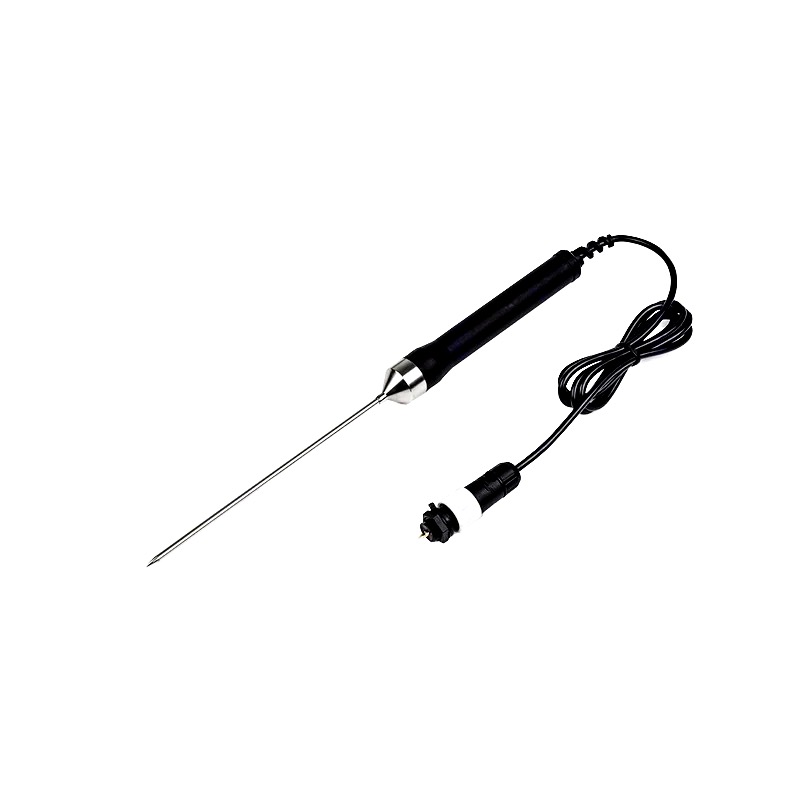
PT100 RTD vs. NTC thermistor
A platinum RTD follows a defined resistance–temperature relationship referenced to its nominal resistance and the applicable standard. NTC thermistors use a semiconductor element with a negative, nonlinear resistance curve; their nominal resistance and B value or R/T data must be specified for the selected part. The two are not interchangeable by sensor name alone: the controller input, conversion method, wiring, tolerance, and calibration must match.
Choose based on the actual measurement and system requirements. Compare the full measurement-chain error, installation method, response under test conditions, signal conditioning, component availability, and production validation—not a generic claim that one technology is always more accurate.

When the standard matters
When an RFQ calls for “PT100 IEC,” confirm the applicable edition and required tolerance class with the customer or engineering standard. IEC 60751:2022 covers the industrial platinum sensor/thermometer resistance relationship and requirements. A standard-compliant sensing element does not automatically make the finished probe compliant in every mechanical or environmental respect; document the assembly-level acceptance criteria.
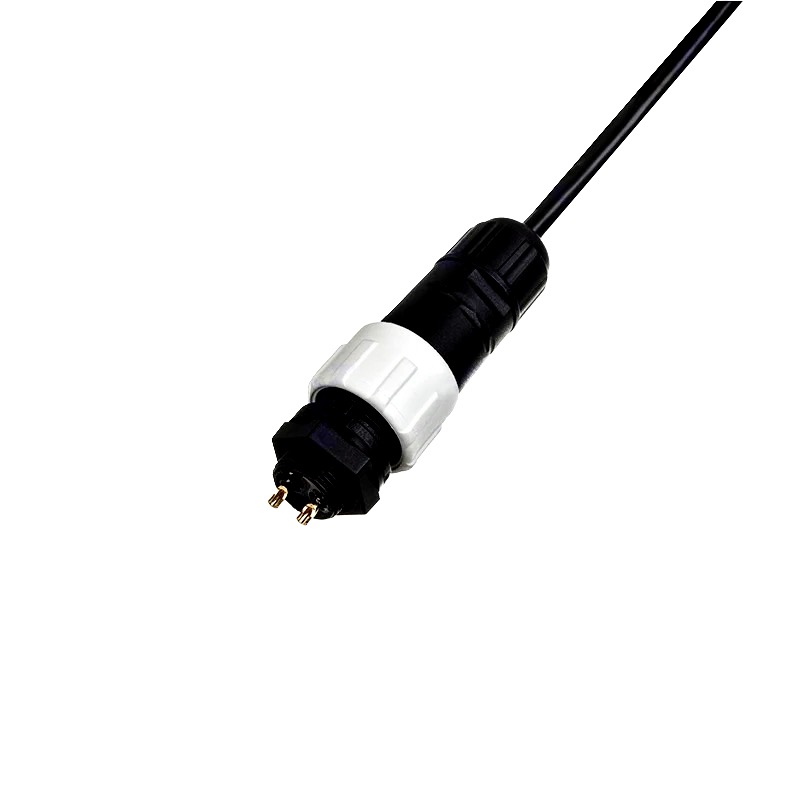
OEM Pt100 selection checklist
1. Define measurement and accuracy needs
Specify operating and storage limits, excursions, tolerance class or system uncertainty, calibration points, and required evidence. Include the instrument and installation in the error budget.
2. Specify the sensor and wiring
State Pt100 or another nominal RTD value, tolerance class, 2-, 3-, or 4-wire connection, lead material and length, connector, and controller input. Confirm lead resistance compensation and electrical noise requirements.
3. Detail the mechanical assembly
Provide probe diameter, insertion length, sheath and insulation materials, process connection, cable exit, sealing, and drawing. Identify medium, pressure, vibration, chemical exposure, and mounting orientation.
4. Agree on tests and change control
Define calibration or resistance checks, sample quantities, inspection criteria, traceability, documentation, production consistency, and notification requirements for component or process changes.
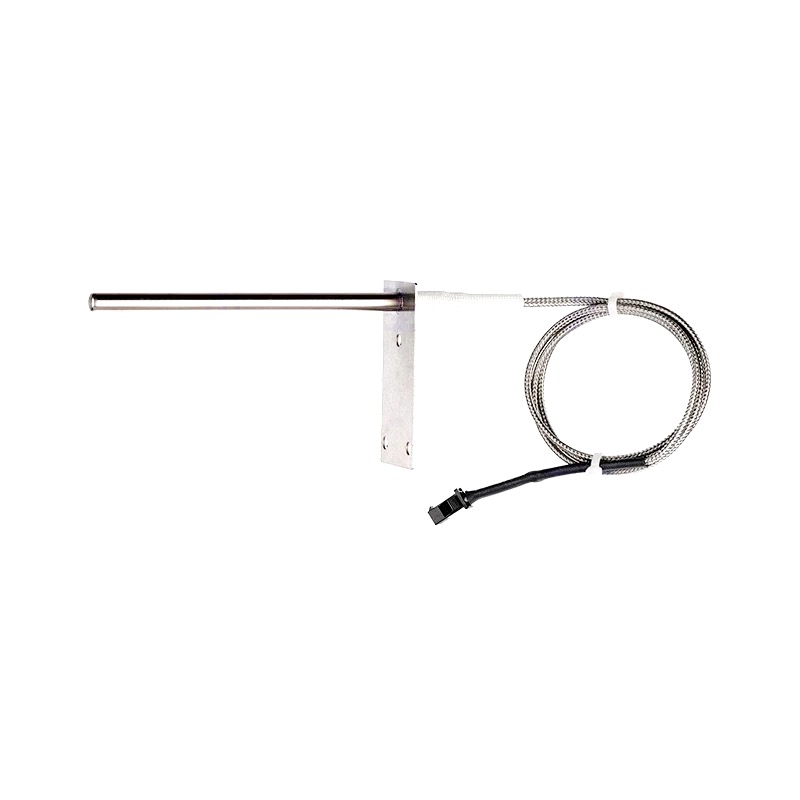
Information to include in an OEM RFQ
- Required sensor type and applicable standard/edition
- Nominal resistance and tolerance class or curve requirements
- Temperature limits, environment, and system uncertainty
- Wiring, connector, cable length, controller, and signal input
- Probe drawing, sheath, fitting, sealing, and insertion details
- Prototype and annual quantities, acceptance tests, and documents
Compare RTD sensor options with our NTC range, read the temperature sensor selection guide, or submit your drawing through the OEM quote form.
Technical reference
IEC 60751:2022 — Industrial platinum resistance thermometers and platinum temperature sensors.