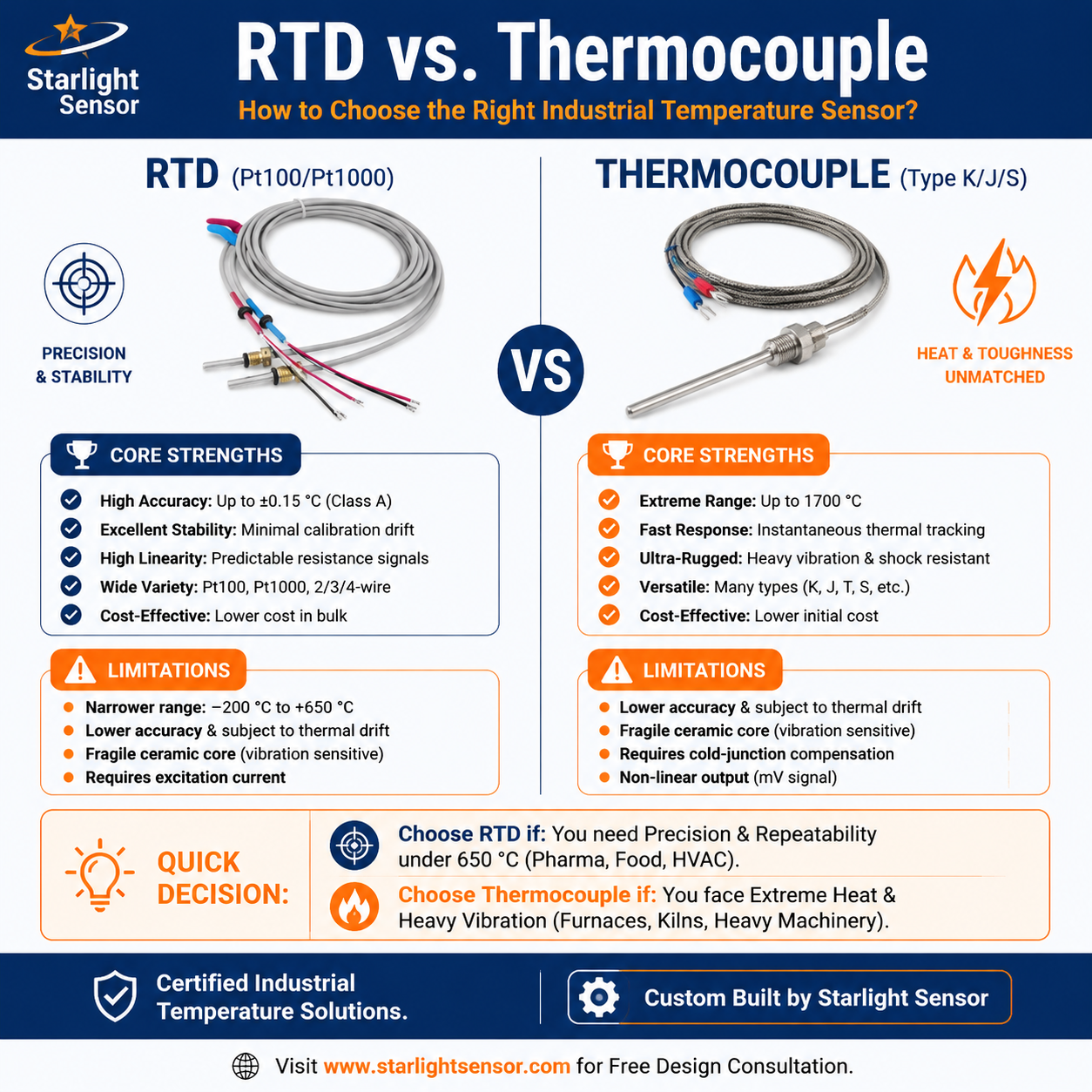
A thermocouple transmitter is a device designed to convert the temperature readings obtained from a thermocouple sensor into a standardized electrical signal. This electrical signal can then be transmitted over long distances to monitoring or control systems, allowing for accurate and remote temperature measurement. Here’s a deeper look at the components and functions of a thermocouple transmitter:
Components of a Thermocouple Transmitter:
- Thermocouple Sensor: The primary component that measures temperature. It consists of two different metals joined at one end, creating a junction where the temperature is measured. The thermocouple generates a voltage proportional to the temperature difference between the junction and the other ends of the metals.
- Transmitter Module: This part of the system converts the millivolt signal from the thermocouple sensor into a standardized output signal, such as 4-20mA or 0-10V. The transmitter module often includes features for signal conditioning, linearization, and cold junction compensation to ensure accurate temperature readings.
Functions of a Thermocouple Transmitter:
- Signal Conversion: Converts the low-level voltage signal from the thermocouple sensor into a higher-level signal that can be easily transmitted and processed by control systems.
- Signal Amplification: Amplifies the small voltage signal from the thermocouple to a level that can be used by other devices in the measurement system.
- Cold Junction Compensation: Corrects for temperature variations at the reference junction, ensuring that the temperature measurement is accurate regardless of ambient temperature changes.
- Linearization: Adjusts the nonlinear output of the thermocouple sensor to a linear signal, making it easier to interpret and use in various applications.
- Remote Monitoring: Allows for temperature data to be transmitted over long distances to a central monitoring or control system, facilitating remote temperature monitoring and control.
Applications of Thermocouple Transmitters:
- Industrial Processes: Widely used in industries such as oil and gas, chemical, power generation, and manufacturing to monitor and control temperature in various processes.
- HVAC Systems: Used in heating, ventilation, and air conditioning systems to ensure optimal temperature control.
- Environmental Monitoring: Employed in environmental monitoring systems to track temperature changes in different environments.
- Automotive and Aerospace: Used in automotive and aerospace applications for precise temperature monitoring of engines, exhaust systems, and other critical components.
Advantages of Using a Thermocouple Transmitter:
- Accurate Temperature Measurement: Provides precise temperature readings, even in harsh and demanding environments.
- Durability and Reliability: Designed to withstand extreme conditions, making them suitable for industrial applications.
- Remote Data Transmission: Enables the transmission of temperature data over long distances, facilitating remote monitoring and control.
- Ease of Integration: Can be easily integrated into existing control and monitoring systems.
In summary, a thermocouple transmitter plays a crucial role in temperature measurement and control, converting temperature data from a thermocouple sensor into a usable electrical signal that can be monitored and controlled remotely.