In industrial systems, temperature sensors are expected to provide accurate measurements for many years. However, engineers sometimes observe that readings gradually change even when the actual temperature remains constant. This phenomenon is known as sensor drift.
Sensor drift can affect various sensing technologies, including RTD temperature sensors, thermocouples, and NTC thermistors. Understanding why drift occurs helps engineers select more reliable sensors and reduce long-term maintenance costs.
What Is Temperature Sensor Drift?
Temperature sensor drift refers to a gradual change in sensor output over time while the real temperature remains unchanged.
For example, a PT100 temperature sensor calibrated at 100 °C may read 101 °C or 102 °C after several years of operation. Even small deviations can affect industrial processes such as:
-
industrial heating systems
-
HVAC equipment
-
food processing lines
-
laboratory instruments
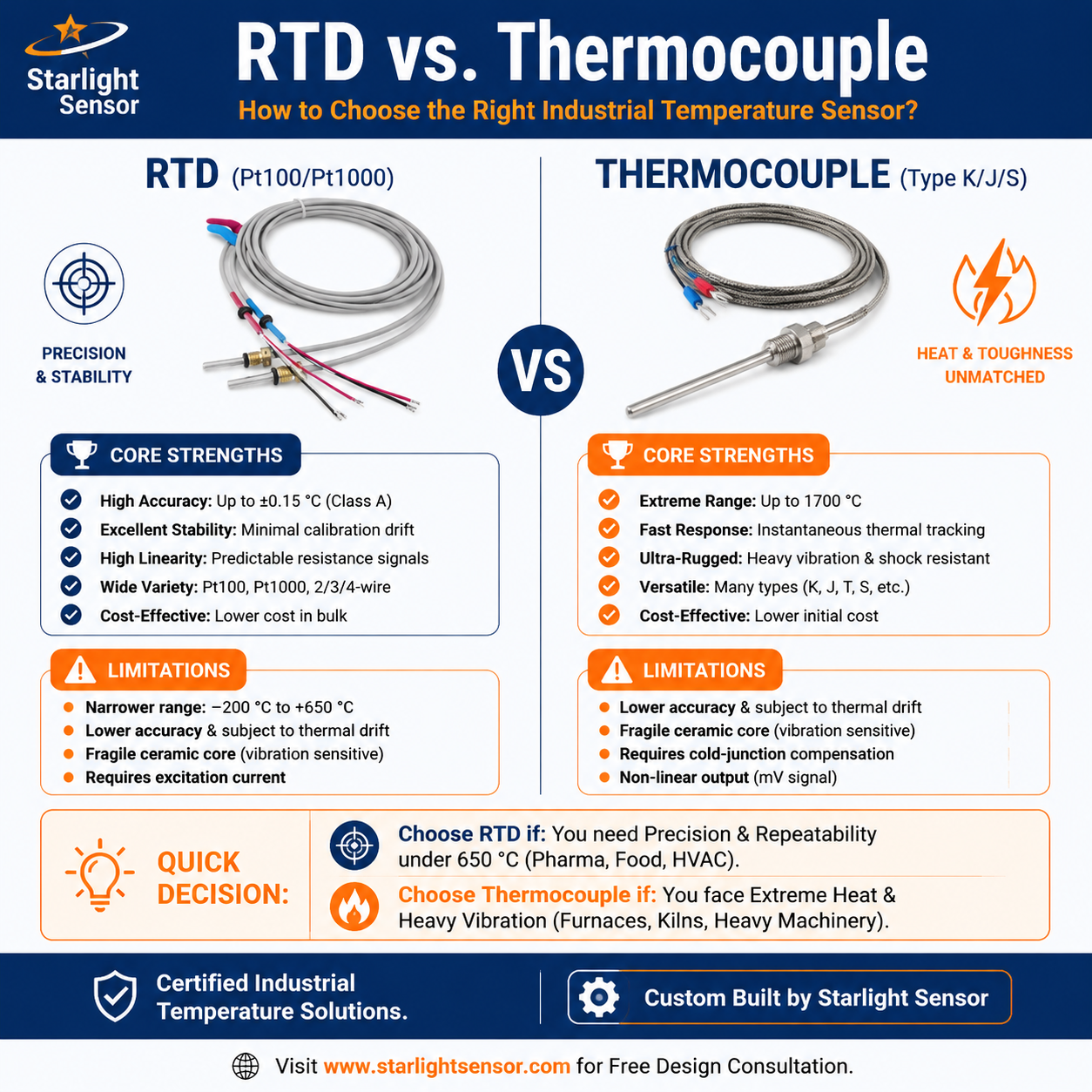
Because of this, many engineers prioritize long-term stability when selecting a temperature probe or thermocouple sensor.
Common Causes of Temperature Sensor Drift
Several physical and environmental factors contribute to drift.
Material Aging
Temperature sensors rely on materials whose electrical properties change with temperature.
Examples include:
-
RTD sensors using platinum resistance elements
-
Thermocouples generating voltage from two metal junctions
-
NTC thermistors using semiconductor materials
Over time, repeated thermal cycles can slightly change these materials, leading to measurement deviations.
High Temperature Exposure
Continuous exposure to elevated temperatures accelerates aging.
In high-temperature applications such as furnaces or ovens, thermocouple probes may operate close to their limits. Prolonged exposure can cause:
-
oxidation of metal wires
-
structural changes in sensing elements
-
gradual signal drift
Selecting the correct thermocouple type and sheath material is therefore critical.
Mechanical Stress and Vibration
Industrial machinery often produces vibration and mechanical stress.
Over time this may affect internal components of a temperature probe, causing:
-
minor wire displacement
-
insulation degradation
-
unstable signal output
Proper mechanical design helps minimize these risks.
Moisture and Contamination
Moisture or chemical exposure can also influence sensor performance.
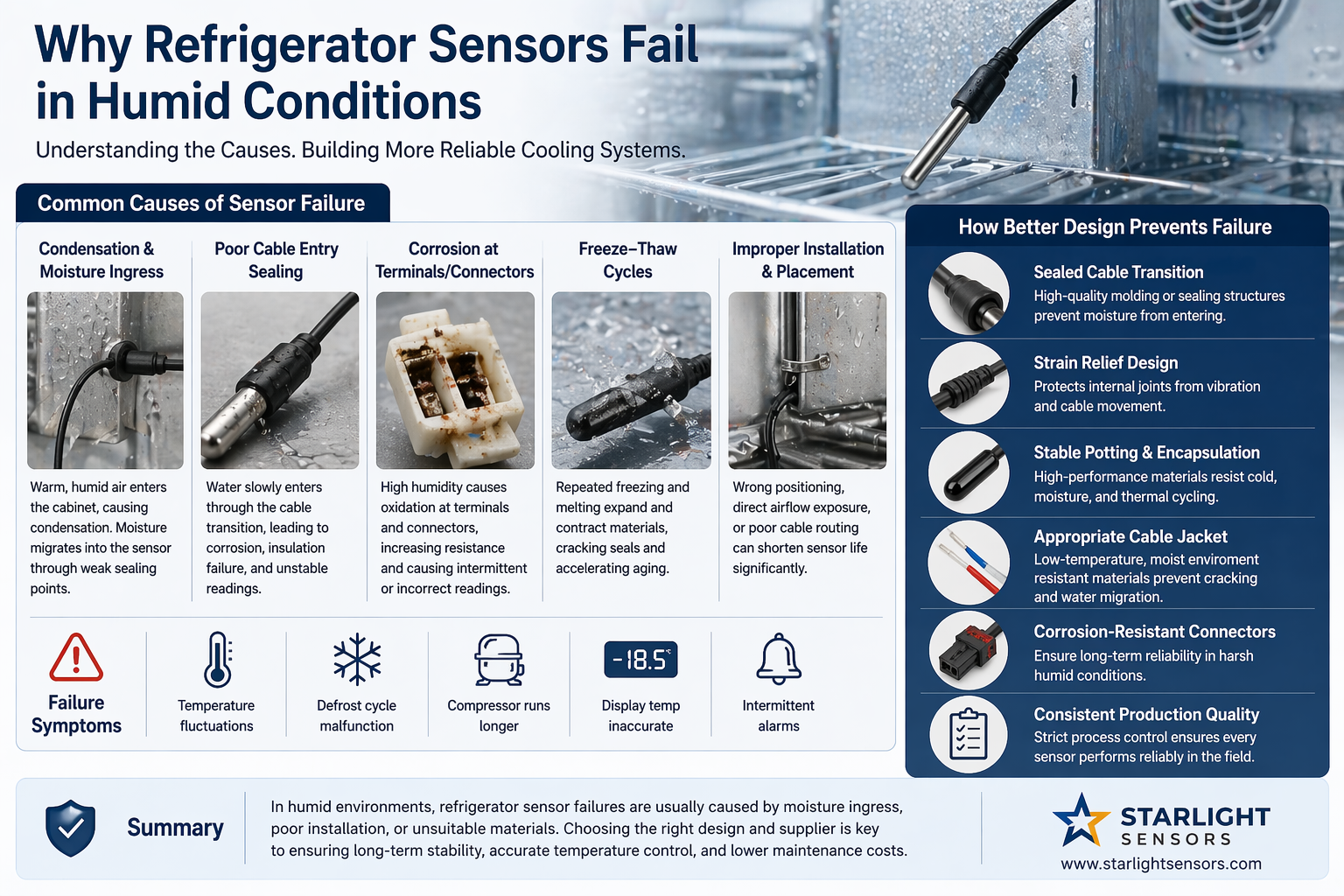
If the probe sheath is not properly sealed, humidity may enter the sensor and change insulation resistance. High-quality temperature sensor manufacturers typically implement sealing and insulation methods to prevent this.
Why Long-Term Stability Matters More Than Initial Accuracy
Many buyers focus only on the initial accuracy listed on a datasheet. However, for long-term industrial operation, sensor stability is often more important.
Sensors that drift quickly may require:
-
frequent recalibration
-
system downtime
-
replacement sensors
Over a period of 5–10 years, these costs can exceed the original sensor price. This is why engineers often evaluate the manufacturing quality and stability of a temperature sensor supplier.
How Manufacturers Reduce Sensor Drift
Reliable manufacturers implement several design and production measures.
High-Purity Materials
High-purity platinum is widely used in RTD temperature sensors because it offers excellent repeatability and long-term stability.
Proper Insulation Materials
Many industrial thermocouples use magnesium oxide (MgO) insulation inside the sheath. MgO provides:
-
high thermal conductivity
-
strong electrical insulation
-
mechanical stability
This structure protects internal wires and improves durability.
Strict Inspection Procedures
Quality manufacturers often perform 100 % electrical testing before shipment to ensure sensor consistency.
Inspection procedures may include:
-
resistance verification
-
insulation resistance testing
-
response testing
These steps help ensure reliable long-term performance.
Choosing a Reliable Temperature Sensor Manufacturer
When selecting a temperature sensor supplier, engineers often consider factors such as:
-
manufacturing experience
-
quality inspection processes
-
customization capability
-
long-term stability performance
A well-designed temperature probe, RTD sensor, or thermocouple can operate reliably for many years when properly manufactured and installed.
Conclusion
Temperature sensor drift is a natural phenomenon influenced by material properties, environmental conditions, and manufacturing quality. By understanding the causes of drift and selecting sensors designed for stability, engineers can improve long-term measurement accuracy and reduce system maintenance.
Whether using RTD sensors, thermocouples, or NTC thermistors, choosing a reliable manufacturer is essential for stable and dependable temperature monitoring.