Temperature control is the foundation of any oven-based process. Whether used in food production, laboratory research, electronics manufacturing, or industrial heat treatment, ovens rely on stable and accurate temperature measurement to maintain consistent results.
At the center of this control system is the temperature sensor for oven environments. This sensor continuously monitors the internal temperature of the chamber and provides feedback to the controller, ensuring that heating elements operate within the required range.
Selecting the right oven temperature sensor is essential for improving measurement stability, energy efficiency, and long-term equipment reliability.
This article explains how oven temperature sensors work, where they are commonly used, and how engineers can verify their accuracy.
How an Oven Temperature Sensor Works
An oven temperature control system typically includes three components:
- a temperature sensor
- a controller or PLC
- a heating element
The sensor detects the temperature inside the oven chamber and sends a signal to the controller. The controller then adjusts the heating power to maintain the desired setpoint.
If the temperature rises above the target level, the controller reduces power. If the temperature drops, the heating system increases output.
This closed-loop system allows ovens to maintain stable conditions even during continuous production.
Because ovens often operate at elevated temperatures, sensors used in these systems must tolerate thermal stress, vibration, and long operating cycles.
Common Temperature Sensors Used in Ovens
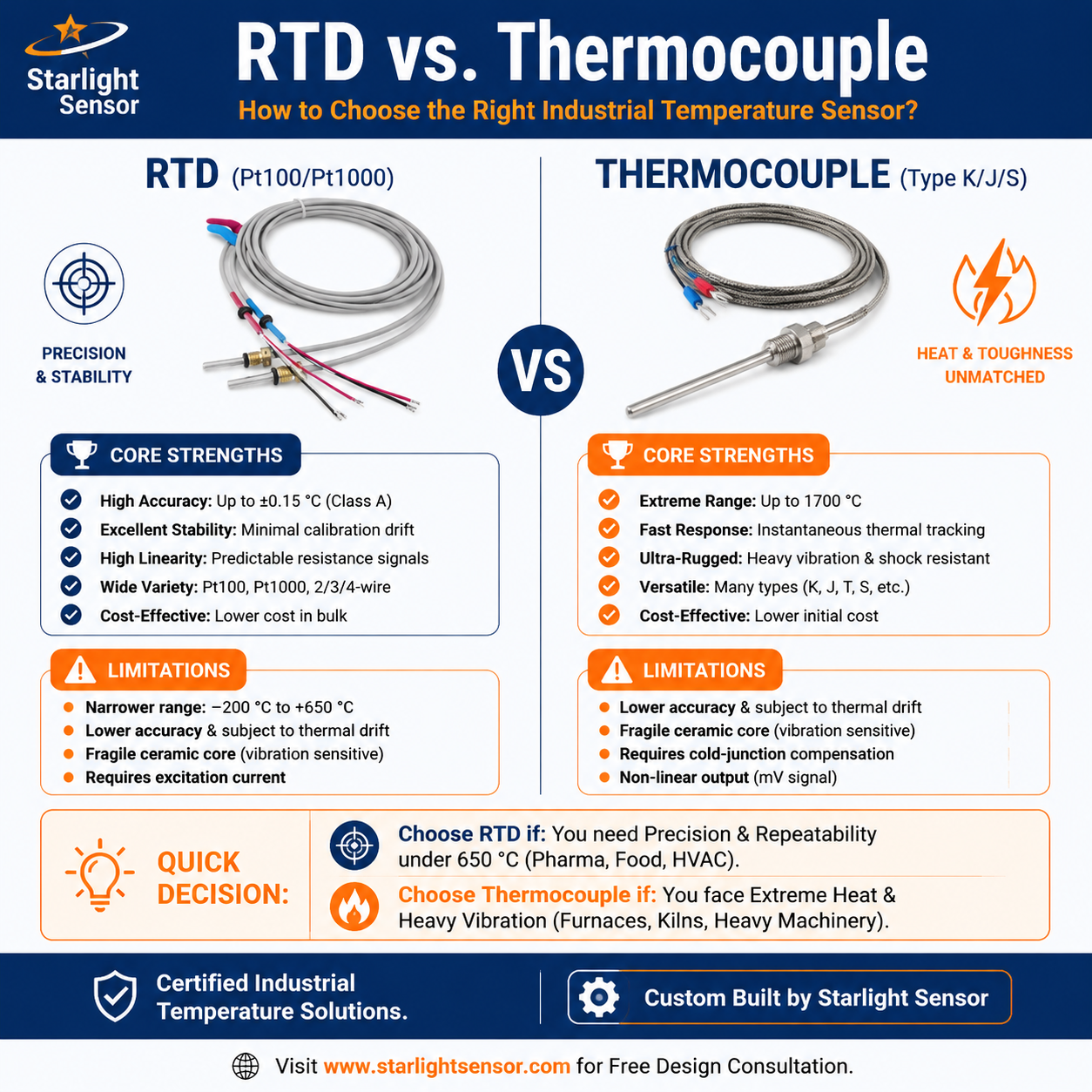
Several sensing technologies can be used for oven temperature measurement. However, two types dominate industrial applications: thermocouples and RTD sensors.
Thermocouple Probes for Oven Applications
Thermocouples are widely used in high-temperature environments. They work by generating a small voltage when two dissimilar metals are joined and exposed to heat.
This voltage corresponds to the temperature difference between the measuring junction and the reference point.
The most widely used model for ovens is the K-type thermocouple probe. It offers a broad temperature range and excellent durability.
Typical characteristics include:
Temperature range
Probe structure
Thermocouple probes are commonly used in:
- industrial ovens
- curing ovens
- heat treatment systems
- powder coating lines
Their ability to withstand high temperatures makes them a preferred solution for many manufacturing processes.
RTD Sensors (PT100)
Another common sensor type is the RTD temperature sensor, especially the PT100 probe.
RTD sensors measure temperature by monitoring changes in the electrical resistance of a platinum element. Platinum has a highly stable resistance-temperature relationship, which makes RTD sensors very accurate.
Typical operating range:
Typical accuracy:
RTD sensors are frequently used in environments where measurement precision is critical, such as:
- laboratory ovens
- pharmaceutical production equipment
- food processing ovens
- environmental test chambers
Although they cannot withstand extremely high temperatures like thermocouples, RTD sensors provide excellent stability for controlled processes.
Typical Sensor Installation in Ovens
A temperature probe for oven systems is usually installed through the wall of the heating chamber.
The sensing tip must be positioned inside the air circulation zone to measure the actual chamber temperature rather than the wall temperature.
Common installation methods include:
Threaded mounting
The probe is secured using a threaded fitting inserted through the oven wall.
Compression fittings
These fittings allow adjustable insertion depth and secure positioning.
Flange mounting
Used in large industrial ovens where stronger mechanical support is required.
Proper installation improves both measurement accuracy and sensor lifespan.
Methods for Testing Oven Temperature Sensors
Reliable temperature measurement requires periodic verification of sensor performance. Engineers commonly use simple reference tests to confirm sensor accuracy.
Ice Water Calibration Test
One widely used method checks the sensor at the freezing point.
Procedure:
- Fill a container with crushed ice.
- Add a small amount of water to create an ice slurry.
- Insert the temperature probe into the mixture.
The sensor should read close to:0°C
If the deviation is large, recalibration may be necessary.
Boiling Water Test
Another simple verification method uses boiling water.
Procedure:
- Heat water until boiling.
- Insert the sensor probe into the water.
At sea level, the expected temperature is approximately:100°C
Although these tests are basic, they provide a quick way to verify whether a temperature sensor is operating within an acceptable range.
Typical Oven Temperature Sensor Designs
Below are examples of commonly used sensors in oven temperature monitoring.
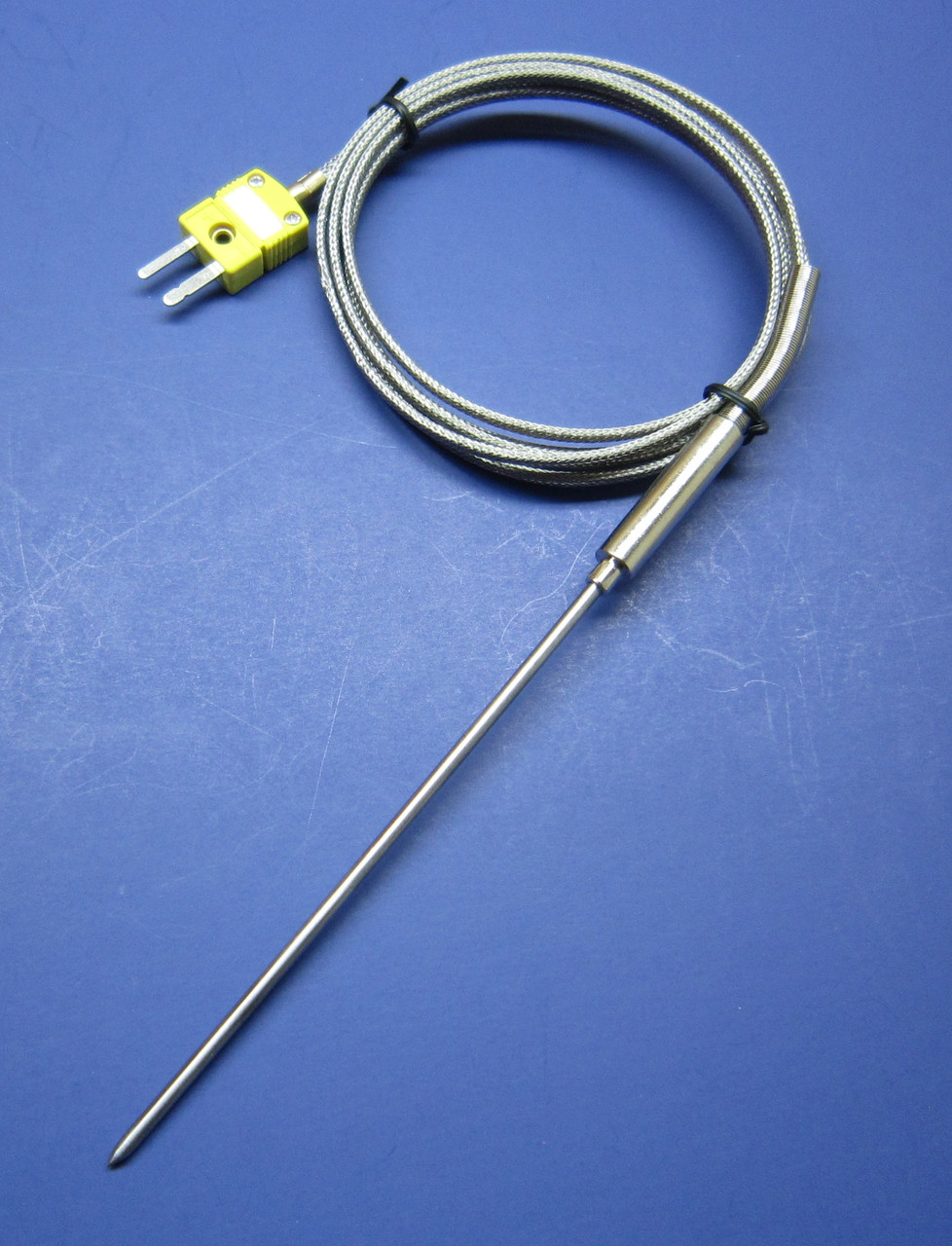
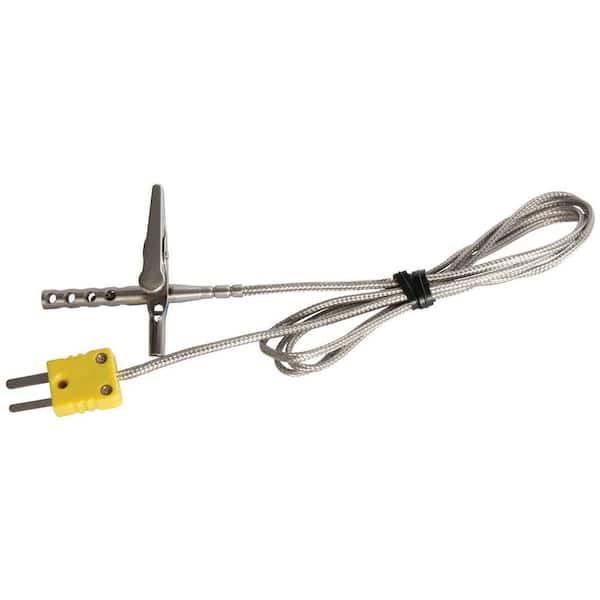

These probes are designed to withstand continuous heat exposure and maintain stable measurement performance during long operating cycles.
Selecting the Right Sensor for Oven Applications
Choosing the appropriate sensor depends on several practical considerations.
Temperature range
High-temperature ovens generally require thermocouples.
Measurement accuracy
Processes requiring precise temperature control may benefit from RTD sensors.
Installation conditions
Factors such as airflow, vibration, and heating speed can influence sensor performance.
Sensor durability
Industrial ovens often operate for extended periods, so robust probe construction is essential.
By evaluating these factors, engineers can determine the most suitable sensor technology for their system.
Conclusion
Reliable temperature measurement is critical for any oven-based process. A well-selected oven temperature sensor ensures stable heating conditions, improves product consistency, and reduces the risk of equipment failure.
In most industrial applications, thermocouples provide excellent performance in high-temperature environments, while RTD sensors offer superior precision for controlled processes.
Understanding how these sensors work and how to verify their accuracy helps engineers design safer and more efficient thermal systems.