An air temperature probe is chosen for the airflow, measurement location, readout, and environmental exposure. A sensor mounted in direct sunlight, near a wall, heater, or stagnant pocket may not represent the air stream the system intends to monitor. Define the measurement purpose and installation before selecting the sensing element and probe assembly.
Choose a representative location
Provide the duct, room, equipment, or process layout and identify the point and height where air temperature matters. Consider airflow direction, stratification, fan operation, nearby heat sources, solar radiation, and the distance from bends or outlets. For duct measurement, specify insertion depth, orientation, and whether a shield or radiation protection is required.
Match the sensor to the controller
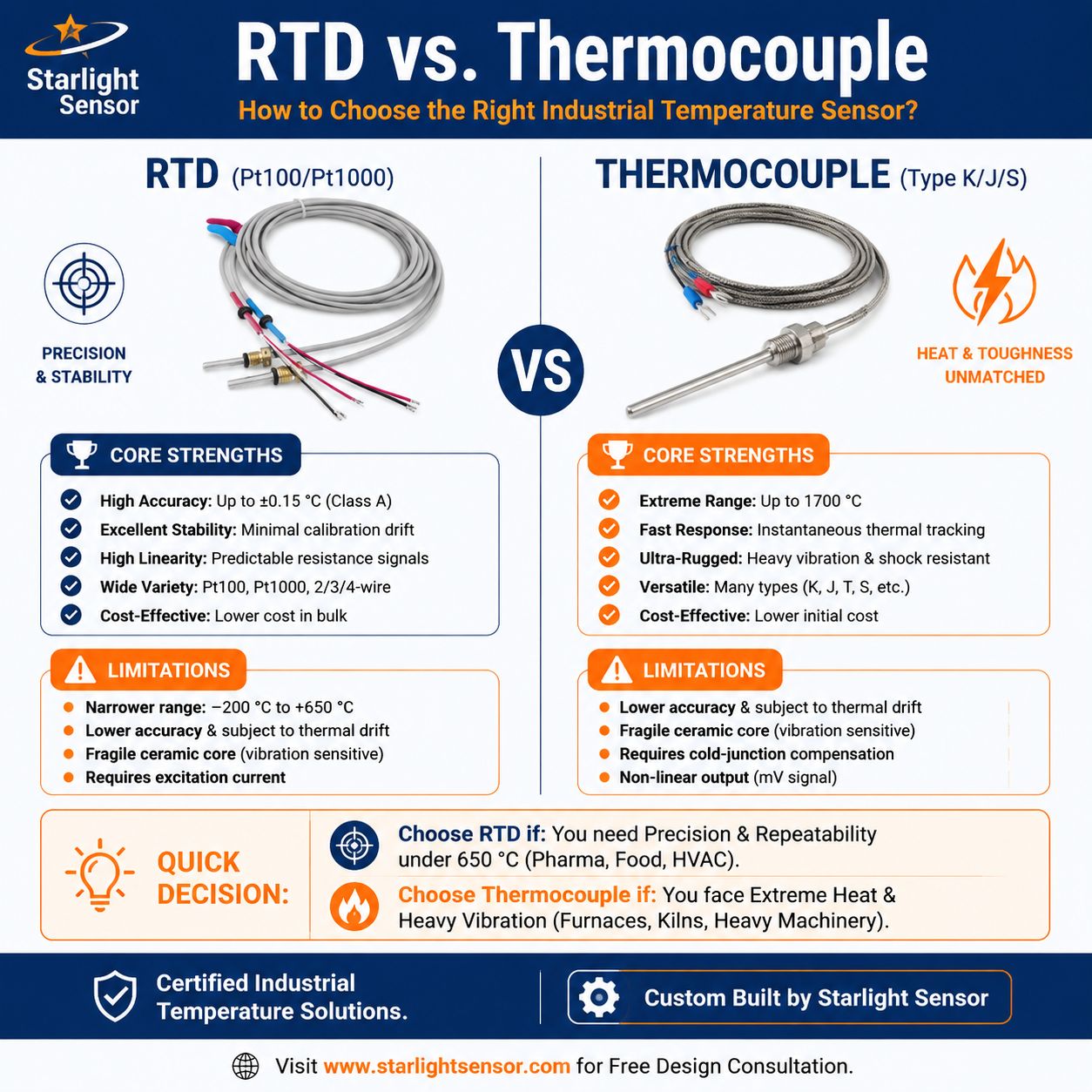
Specify the controller input and sensor type. An NTC needs its resistance curve, tolerance, and conversion method; an RTD requires Pt100/Pt1000 and wiring; a thermocouple requires the correct type, extension wire, and cold-junction compensation. Confirm input range, sampling interval, calibration, and fault handling.
Specify the probe construction for air service
Document probe diameter and length, sensing point, sheath or protective enclosure, mounting flange or fitting, cable, connector, and routing. Consider condensation, dust, moisture, chemicals, vibration, thermal cycling, airflow loading, and service access. Protection and response must be balanced for the actual air movement and exposure.
Validate location and response
Compare readings with a reference at representative locations and operating states, including fan or ventilation changes. Check that probe placement avoids local heat bias and that the assembly responds as required. Record calibration, inspection, and replacement criteria.
Air temperature probe RFQ checklist
- Room/duct drawing, air direction, measurement point, height, and insertion depth.
- Sensor type/curve, controller input, tolerance, sampling, and calibration.
- Probe geometry, shield/enclosure, mounting, cable, connector, and routing.
- Airflow, radiation, condensation, dust, chemicals, vibration, and maintenance needs.
- Sample quantity, production volume, inspection, and drawing revision.
Review OEM air sensor options
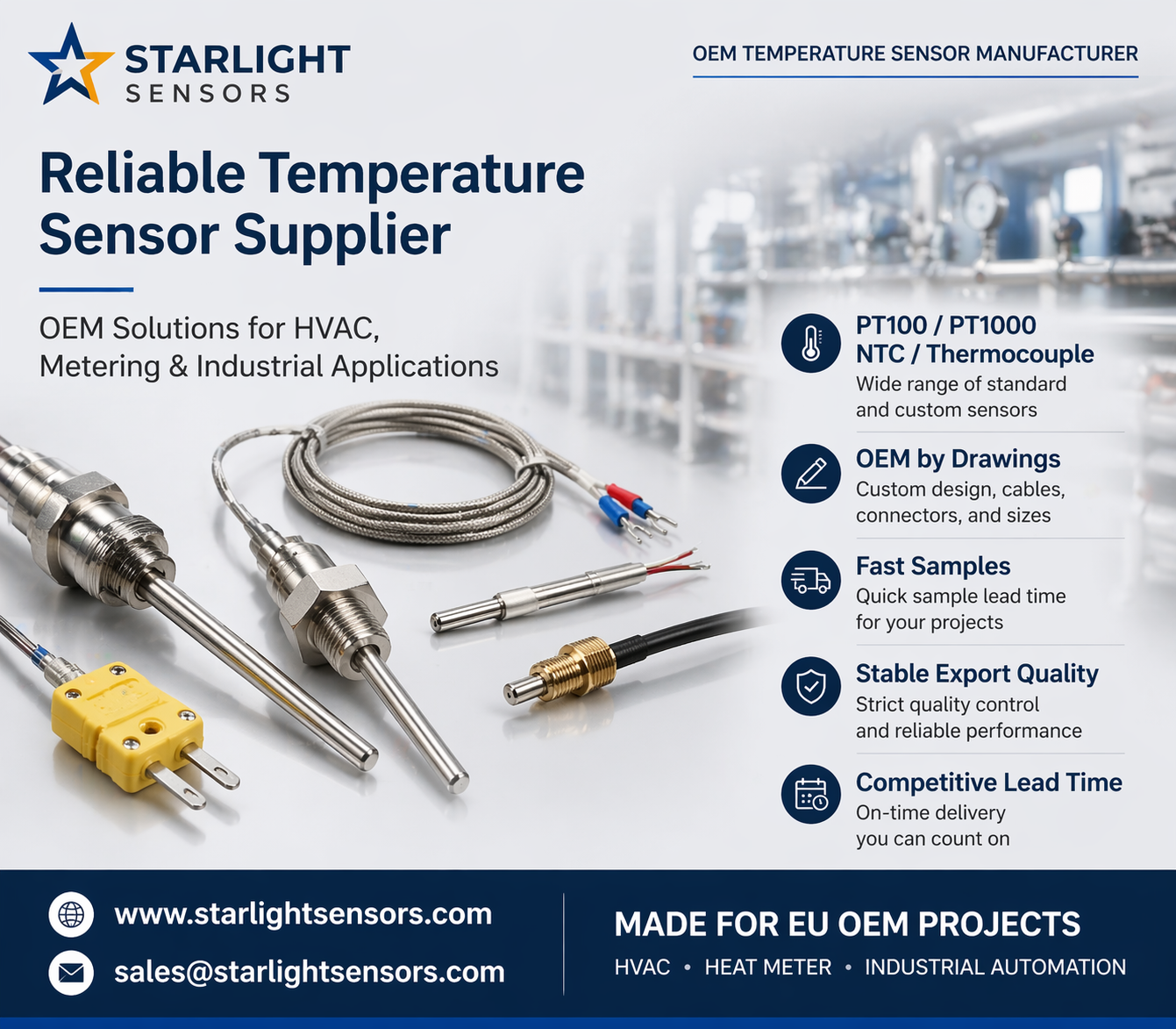
See the air-conditioner temperature sensor option and browse the broader temperature sensor range. Include the air layout and controller model when you request an OEM probe review.