Power transformers are among the most important assets in electrical systems. They are widely used in factories, commercial buildings, substations, renewable energy projects, AI data centers, EV charging stations, and industrial plants. When a transformer fails, the result can be costly downtime, damaged equipment, and serious operational disruption.
One of the most common causes of transformer failure is excessive heat. In many cases, overheating develops slowly over time and remains unnoticed until major damage has already occurred. This is why temperature monitoring has become one of the most effective ways to protect transformers and extend service life.
As electrical demand continues to grow in 2025 and beyond, more engineers and buyers are searching for terms such as transformer temperature monitoring, temperature sensor for transformer, dry type transformer temperature sensor, oil transformer temperature sensor, and transformer winding temperature protection. These searches reflect a clear market trend: temperature monitoring is no longer optional, but essential.
Why Heat Causes Transformer Failure
Transformers naturally generate heat during operation. Electrical losses in the core and windings create temperature rise whenever the transformer is energized. Under heavy load conditions, temperatures increase even further.
If heat is not controlled properly, several problems can occur.
The first is insulation aging. Transformer insulation materials degrade much faster at elevated temperatures. Even a moderate increase above rated temperature can significantly shorten insulation life.
The second is winding damage. Copper windings expand and contract with temperature cycling. Excessive heat can weaken insulation between turns and eventually lead to short circuits.
The third is cooling system stress. In oil-filled transformers, high temperature accelerates oil oxidation and reduces cooling efficiency. In dry type transformers, insufficient airflow can create hot spots inside the windings.
The fourth is unexpected shutdown. Many protection systems trip when temperatures exceed safe limits. While this protects the transformer, it can stop production lines, charging systems, or data center operations.
For this reason, controlling transformer temperature is directly linked to reliability and asset lifespan.
Why Temperature Monitoring Matters More Today
The need for transformer protection is increasing because modern electrical systems place greater thermal stress on equipment.
AI data centers are expanding rapidly and require continuous high-power operation. Transformers serving these facilities often run close to capacity.
EV charging stations create high peak demand, especially fast charging networks. Repeated load cycles increase transformer heating.
Renewable energy projects such as solar farms and battery storage systems create fluctuating load patterns that can challenge thermal stability.
Smart grid systems demand predictive maintenance and real-time equipment health monitoring.
These fast-growing sectors are driving demand for transformer temperature sensors, PT100 transformer probes, transformer hot spot monitoring systems, and intelligent thermal protection devices.
Key Temperature Points to Monitor
Effective monitoring starts with understanding where heat builds inside a transformer.
The most important point is winding temperature. Winding hot spots are often the highest internal temperature and the best indicator of insulation aging.
Oil temperature is critical for oil-filled transformers. Top oil temperature reflects loading condition and cooling system performance.
Core temperature can also be useful in some designs to detect abnormal magnetic losses or local heating.
Terminal and connection temperatures should not be ignored. Loose connections often create local hot spots before major failure occurs.
Ambient temperature around the transformer also matters. High surrounding temperature reduces cooling efficiency and lowers safe loading limits.
By monitoring several points together, operators gain a much clearer picture of transformer health.
Common Sensor Types Used for Transformer Protection
Different transformer designs use different sensor technologies.
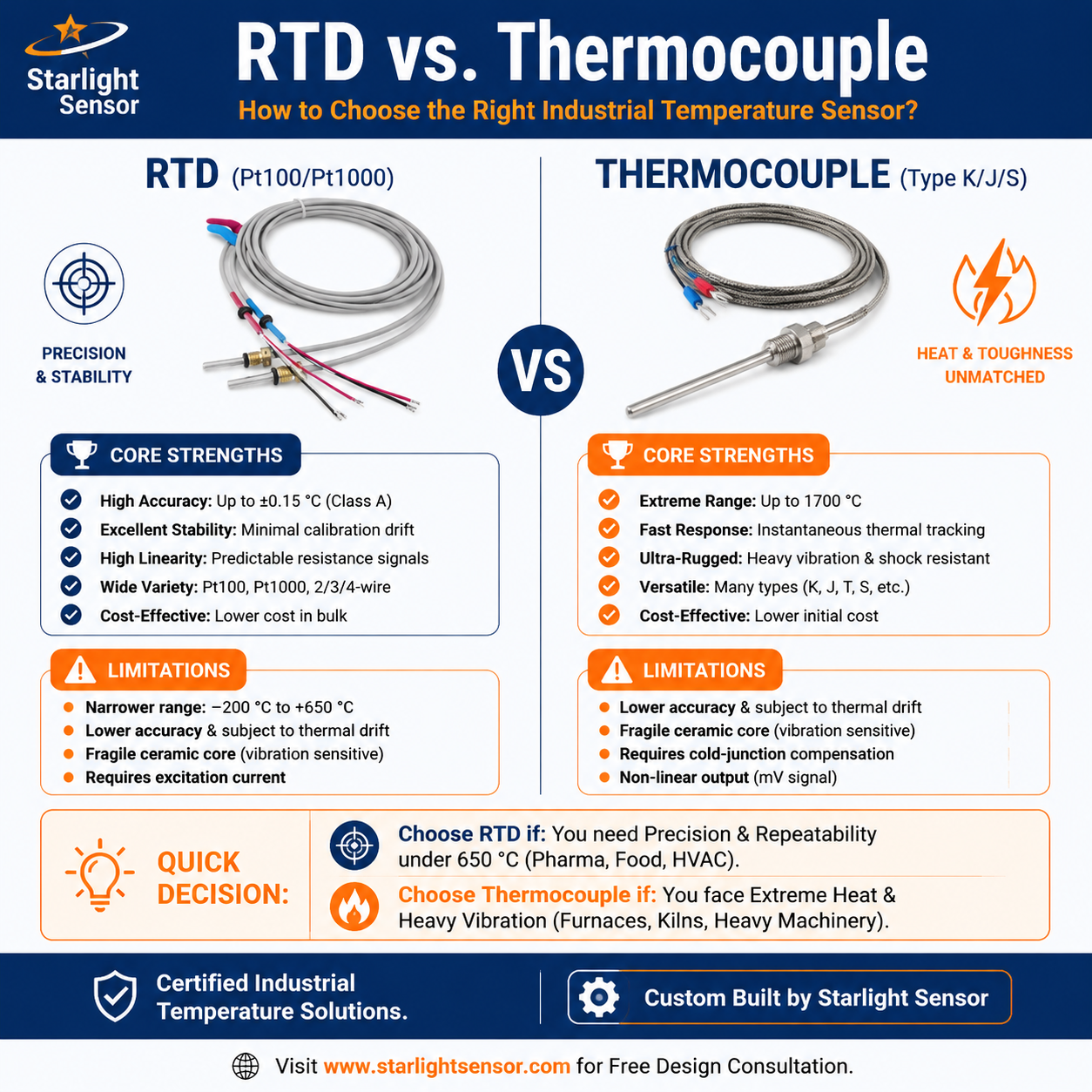
PT100 and PT1000 RTD sensors are among the most common choices. They offer high accuracy, good repeatability, and long-term stability. They are widely used in dry type transformer winding monitoring and oil temperature measurement.
NTC and PTC thermistors are also common. These are often used for thermal alarms, fan control, and overtemperature protection. They are compact and cost effective.
Surface mount temperature sensors are useful for retrofit projects where internal installation is difficult. These sensors can monitor tank surfaces, cabinets, or connection points.
Digital temperature sensors are increasingly used in remote monitoring systems, smart substations, and IoT platforms.
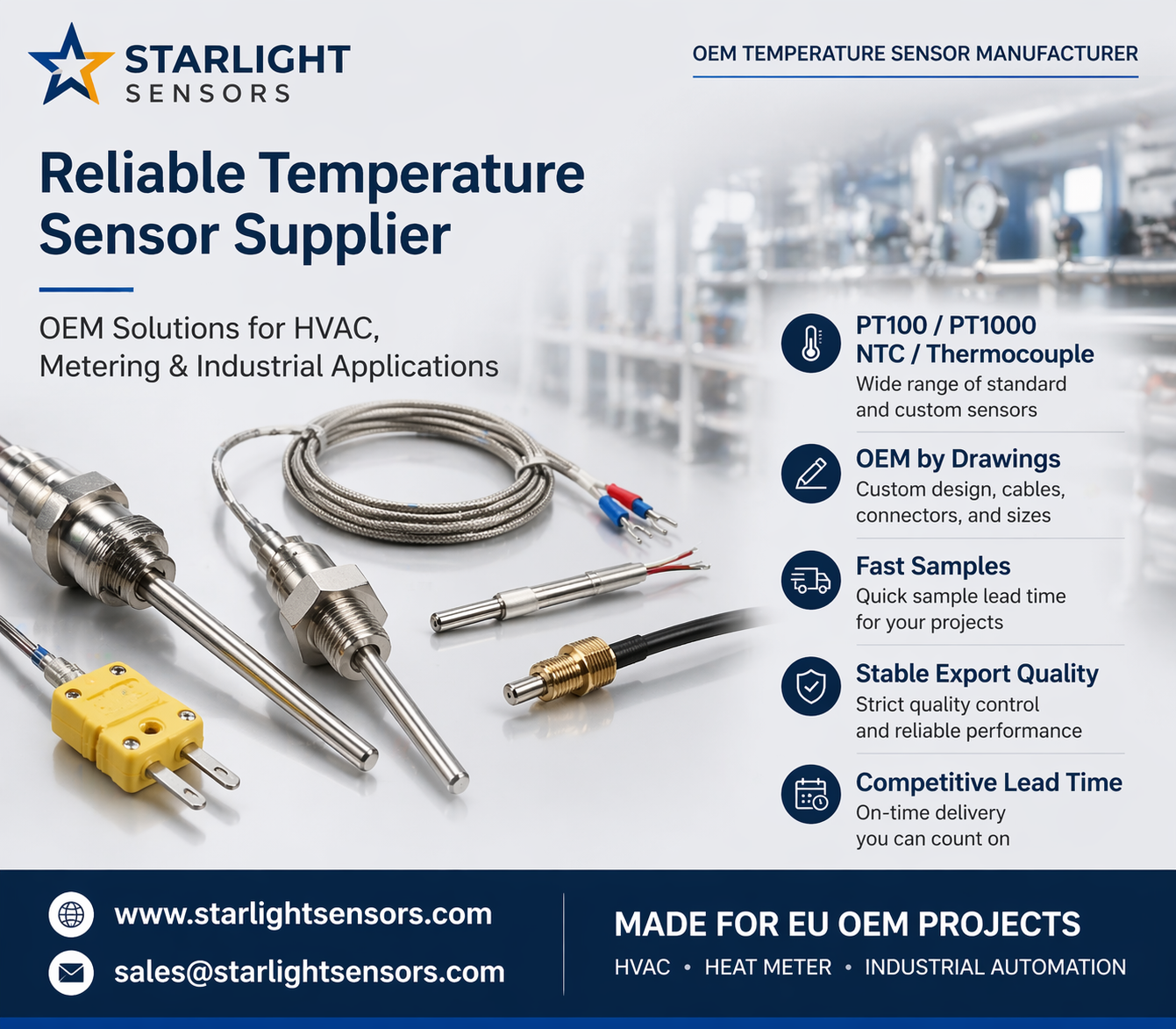
For OEM transformer manufacturers, custom temperature sensors are often required to match specific dimensions, cable lengths, connectors, and installation methods.
How Temperature Monitoring Prevents Failure
Temperature monitoring helps prevent transformer failure in several practical ways.
First, it provides early warning. A gradual rise in operating temperature often appears long before a transformer fails. This allows maintenance teams to investigate cooling fans, overload conditions, ventilation issues, or loose terminals before serious damage occurs.
Second, it improves cooling control. Fans and pumps can operate automatically based on actual temperature rather than fixed timers. This reduces unnecessary energy use while maintaining safe operation.
Third, it supports load management. Operators can reduce overload during peak periods when temperatures approach critical levels.
Fourth, it enables planned maintenance. Instead of reacting to sudden failures, companies can schedule service during convenient maintenance windows.
Fifth, it extends equipment life. Lower average operating temperature generally means slower insulation aging and longer transformer lifespan.
Dry Type vs Oil-Filled Transformers
Dry type transformers commonly use embedded PT100 sensors in each phase winding. These sensors connect to temperature relays that provide alarm, trip, and fan control functions.
Oil-filled transformers often monitor top oil temperature using threaded RTD probes installed in pockets or thermowells. Larger units may also estimate winding hot spot temperature based on load and oil measurements.
Both types benefit greatly from reliable thermal monitoring, but sensor selection and installation methods differ.
How to Select the Right Transformer Temperature Sensor
When choosing a transformer temperature sensor, several factors should be considered.
Start with transformer type: dry type or oil-filled.
Next, determine the required temperature range. Industrial applications may require higher ratings than standard commercial systems.
Accuracy requirements are also important. For critical infrastructure such as data centers or utility systems, stable and precise sensors are preferred.
Cable length, environmental sealing, and connector type should match installation conditions.
Output signal should also be considered. RTD resistance outputs are common, but some systems require analog transmitters or digital communication.
Finally, supplier consistency matters. For OEM production, stable quality and repeatable batch performance are often more important than the lowest unit price.
Market Opportunity in 2026 and Beyond
Global investment in AI computing, EV charging, renewable energy, and electrical infrastructure continues to grow. Every new substation, charging hub, data center, and industrial expansion creates demand for reliable transformers.
Where transformers are installed, temperature monitoring follows.
This means continued demand for PT100 transformer sensors, dry type transformer probes, oil temperature sensors, thermal relays, and custom transformer protection sensors.
For equipment manufacturers and maintenance contractors, choosing reliable sensor partners can reduce field failures and improve long-term competitiveness.
Final Thoughts
Transformer failure is often expensive, but many failures are preventable. Heat is one of the clearest warning signs, and temperature monitoring remains one of the most cost-effective protection methods available.
By measuring winding temperature, oil temperature, hot spots, and ambient conditions, operators can detect issues early, improve cooling performance, reduce downtime, and extend asset life.
As power demand grows worldwide, transformer reliability will matter more than ever. The companies that invest in better thermal monitoring today will avoid bigger problems tomorrow.
If your project requires PT100, PT1000, NTC, PTC, or custom transformer temperature sensors, selecting the right solution now is an important step toward safer and more reliable transformer operation.
Discuss Your Transformer Temperature Monitoring Requirements
When comparing sensor technologies, start with our RTD vs thermocouple selection guide. For an application review, send your transformer temperature sensor requirements, including the transformer type, measurement location, controller input, and installation drawings.