A greenhouse temperature monitoring system depends on both the sensor and where it is installed. A probe exposed to direct sunlight, irrigation, heater discharge, or a wall can read differently from the air around the crop. Define the measurement purpose and placement before selecting the sensing element, enclosure, cable, and readout.
Choose representative measurement locations
Map the growing area, crop height, ventilation openings, heating/cooling equipment, and known temperature gradients. Decide whether the project needs one ambient point or readings across zones and elevations. Keep sensors away from direct heat sources and locations that do not represent the crop environment; document shielding or ventilation requirements for the installation.
Match sensor output to the controller
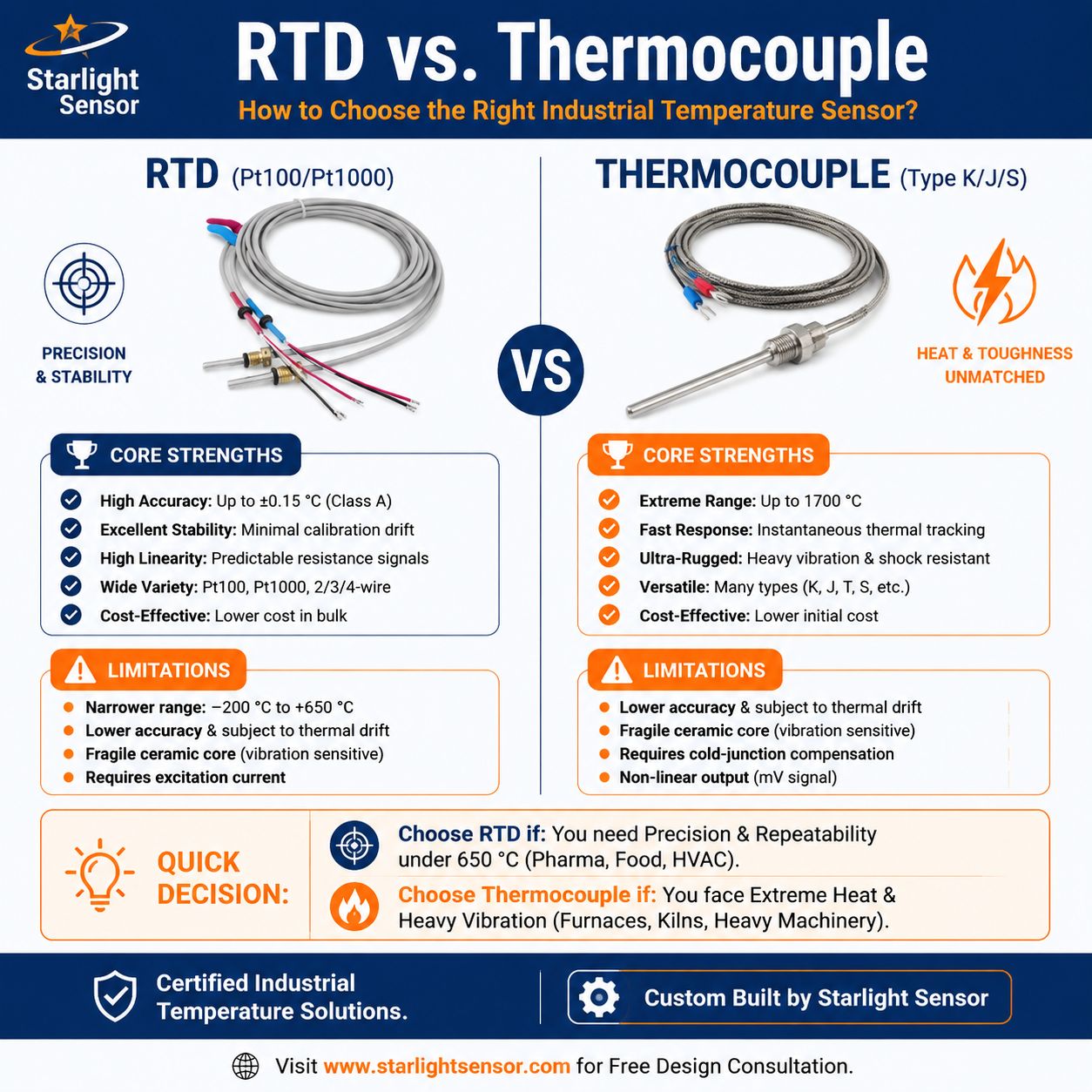
Specify whether the controller accepts an NTC curve, RTD, thermocouple, or another input. For an NTC, provide nominal resistance, B-value reference, and tolerance; for an RTD, specify Pt100/Pt1000 and wiring; for a thermocouple, identify the type and cold-junction compensation. Confirm the controller’s input, conversion, sampling interval, alarm logic, and calibration method.
Specify environmental protection and mounting
Document probe dimensions, sensing point, enclosure or shield, mounting height, cable, connector, and routing. Consider condensation, irrigation splash, washdown, fertilizer or cleaning chemicals, dust, UV exposure, and daily thermal cycling. Select protection based on the actual site conditions and airflow needs; a sealed enclosure can affect response if it blocks air exchange.
Validate readings and monitoring behavior
Compare readings at representative crop locations with a reference during typical ventilation, heating, and sunlight conditions. Define sample intervals, high/low alarms, sensor fault reporting, and behavior during communication or power loss for the monitoring system. Review calibration and maintenance intervals based on site conditions.
Greenhouse temperature sensor RFQ checklist
- Number and location of zones, height, mounting, and placement drawing.
- Sensor type/curve, controller input, range, tolerance, sampling, and alarms.
- Probe enclosure/shield, dimensions, cable, connector, and airflow requirement.
- Condensation, irrigation, chemicals, dust, UV, and temperature cycling.
- Calibration, system interface, samples, volume, inspection, and revision control.
Review temperature and humidity sensor options
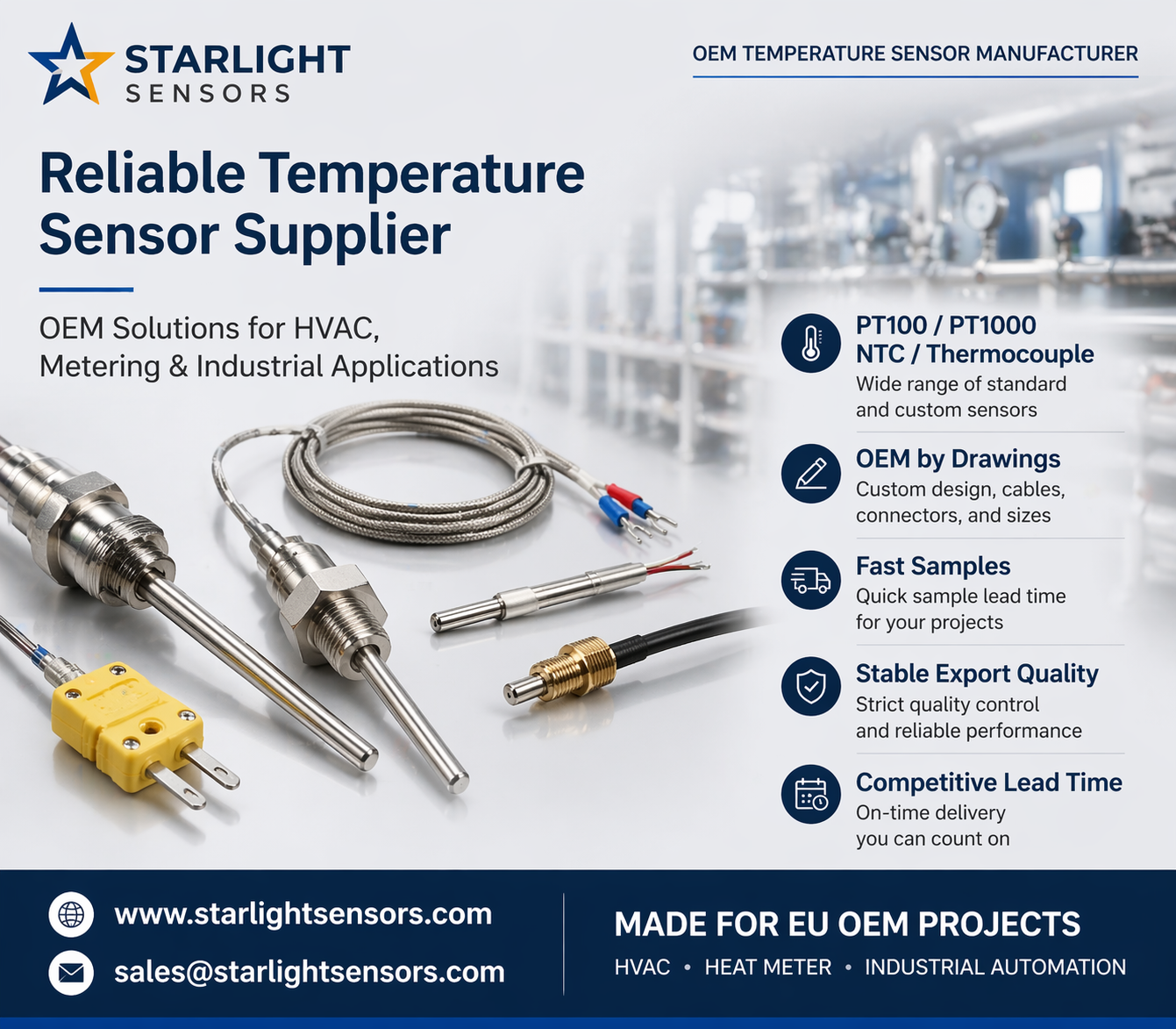
For combined environmental monitoring, browse the temperature and humidity sensor range and the broader temperature sensor options. Include the greenhouse layout and controller model when you request an OEM sensor review; confirm site-specific placement, protection, and interface needs before deployment.