A high-temperature probe must be specified for the process temperature, atmosphere, exposure time, installation, and required service life. “High temperature” is not a single construction or rating: the sensing element, wire, insulation, sheath, junction, and termination each have limits. Confirm the complete assembly’s model-specific limits before design-in.
Define temperature and process conditions
Document normal, peak, upset, and cycling temperatures; dwell time; ramp rate; and gradients. Describe the atmosphere, pressure, vacuum, oxidation or reducing conditions, contaminants, flow, vibration, and thermal shock. These conditions can affect element stability, insulation, sheath compatibility, and long-term drift.
Select the sensor type and readout
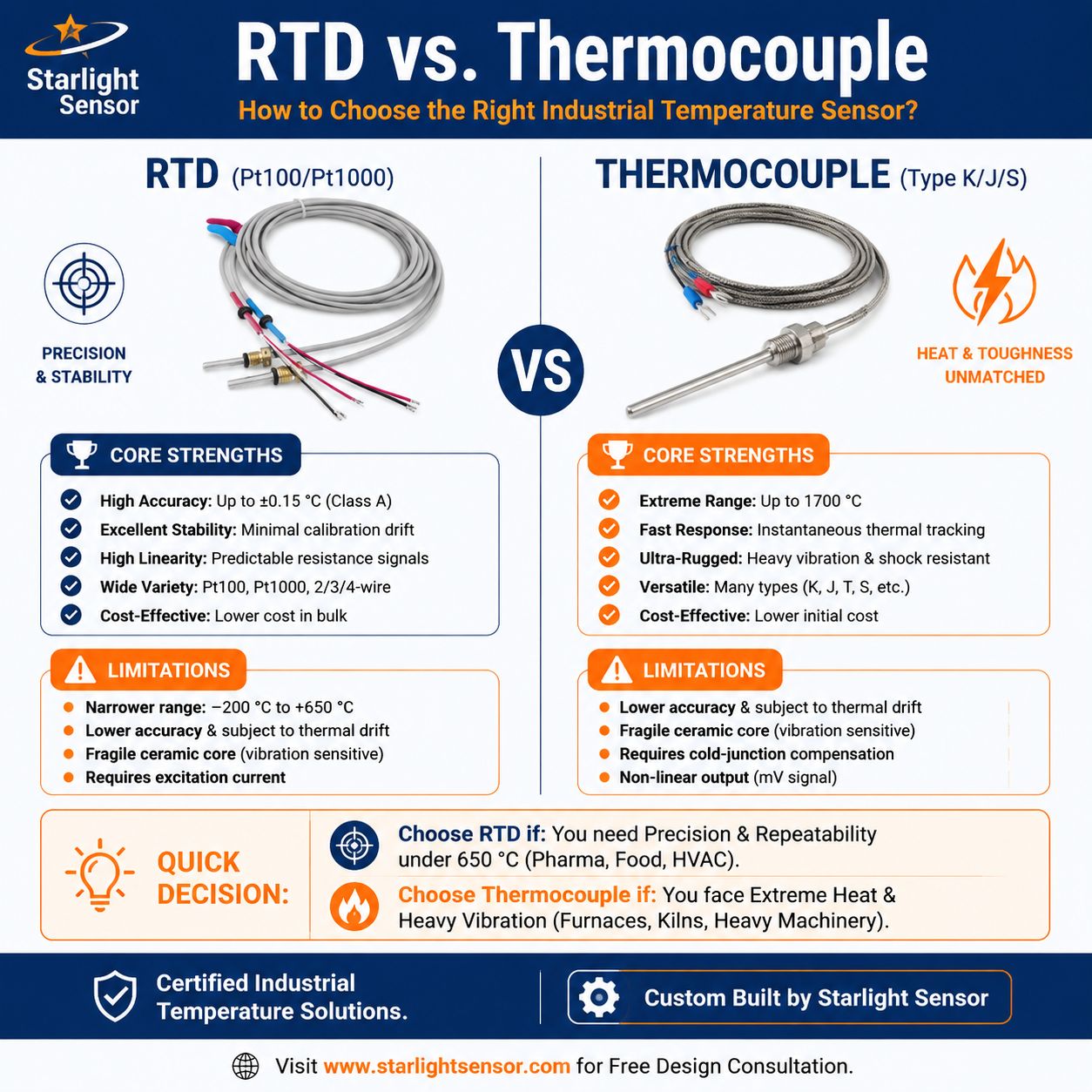
Thermocouples, RTDs, and thermistors use different materials, signals, and readout methods. Specify the sensor type, required range and tolerance, instrument input, wiring, excitation or cold-junction compensation, and calibration points. Do not choose a sensor family from its headline temperature range alone; verify the selected element and assembly against the actual service conditions.
Specify probe construction and installation
Provide sheath material and dimensions, probe length, junction location, insulation, termination, cable or extension wire, connector, mounting, and insertion depth. Review heat transfer, electrical isolation, chemical compatibility, vibration, and protection requirements. If an MI construction is proposed, define bend limits and termination needs with the supplier for the selected diameter and design.
Plan for drift, calibration, and replacement
High-temperature exposure may change sensor output over time. Set calibration intervals and acceptance limits based on the application’s risk, exposure, and observed drift. Record the reference instrument and test conditions, and plan inspection for sheath damage, insulation or termination issues, and wiring degradation.
High-temperature probe RFQ checklist
- Temperature profile, exposure duration, cycling, atmosphere, pressure, and contaminants.
- Sensor type, range, tolerance, readout, wiring, and calibration requirements.
- Sheath/insulation materials, dimensions, junction, insertion, mounting, and termination.
- Response, electrical isolation, vibration, chemical exposure, drift, and service life.
- Drawing revision, samples, production volume, inspection, and traceability.
Review high-temperature probe options
Read the mineral insulated thermocouple selection guide and Type K high-temperature application guide. Browse the thermocouple sensor range and send the process profile and installation drawing through the OEM contact page to confirm model-specific options and limits.