A liquid temperature sensor probe is selected for the fluid, process conditions, installation point, and readout. Define how the probe contacts the liquid and which materials are exposed to it; a sensor element alone does not establish compatibility with pressure, flow, corrosion, cleaning, or process requirements.
Define the liquid and operating conditions
Document the fluid or mixture, normal and upset temperature, pressure, flow, viscosity where relevant, chemical exposure, and cleaning or washdown conditions. Identify whether the probe is immersed directly or installed through a fitting, thermowell, tank wall, or process connection. Wetted materials and sealing must be reviewed for the actual process.
Select the sensor element and readout
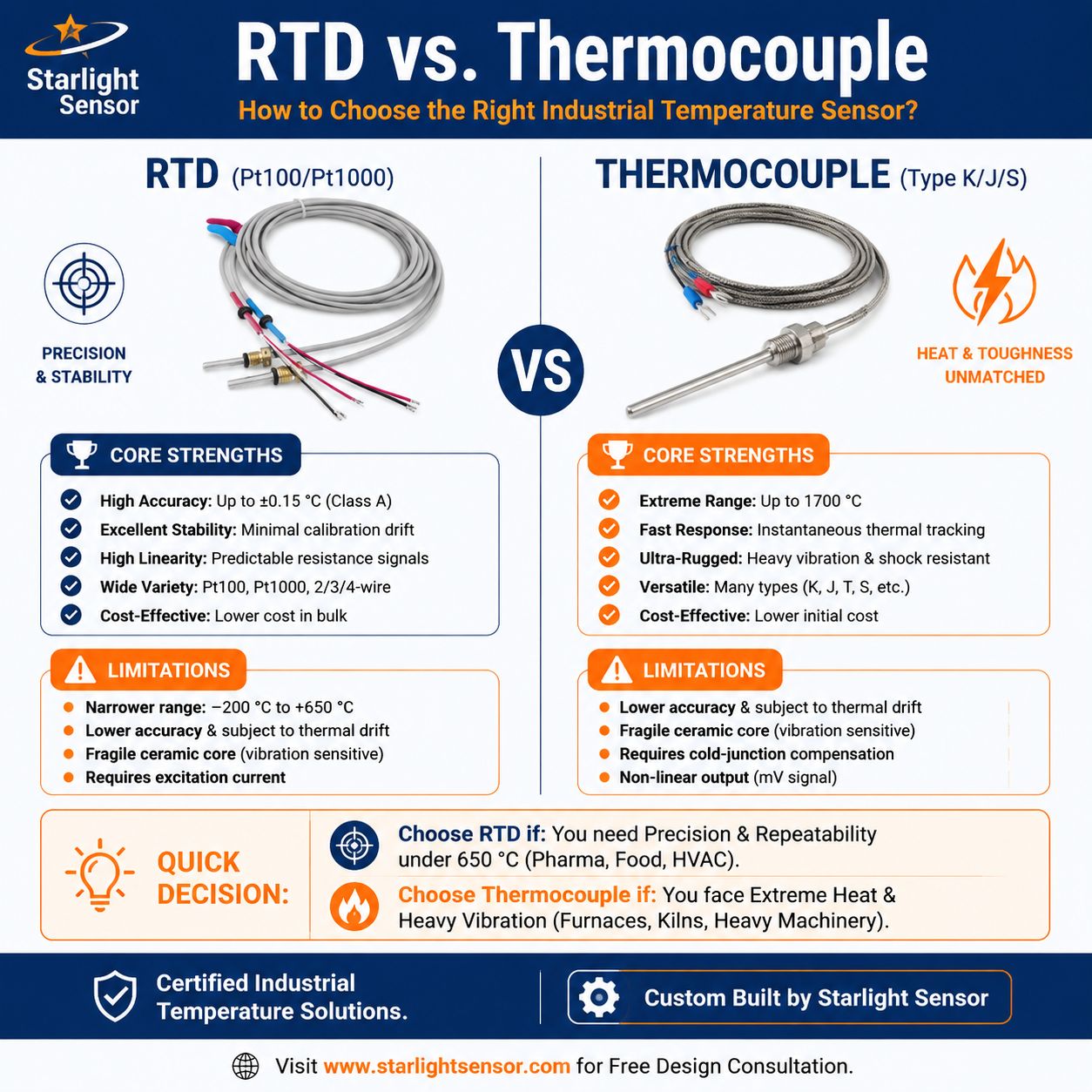
NTC thermistors, RTDs, and thermocouples require different input circuits and signal conversion. Specify the nominal resistance and curve for an NTC, Pt100/Pt1000 and wiring configuration for an RTD, or the thermocouple type and cold-junction compensation for a thermocouple. Confirm the controller input, required range, tolerance, calibration method, and expected response before choosing the element.
Specify the immersion probe assembly
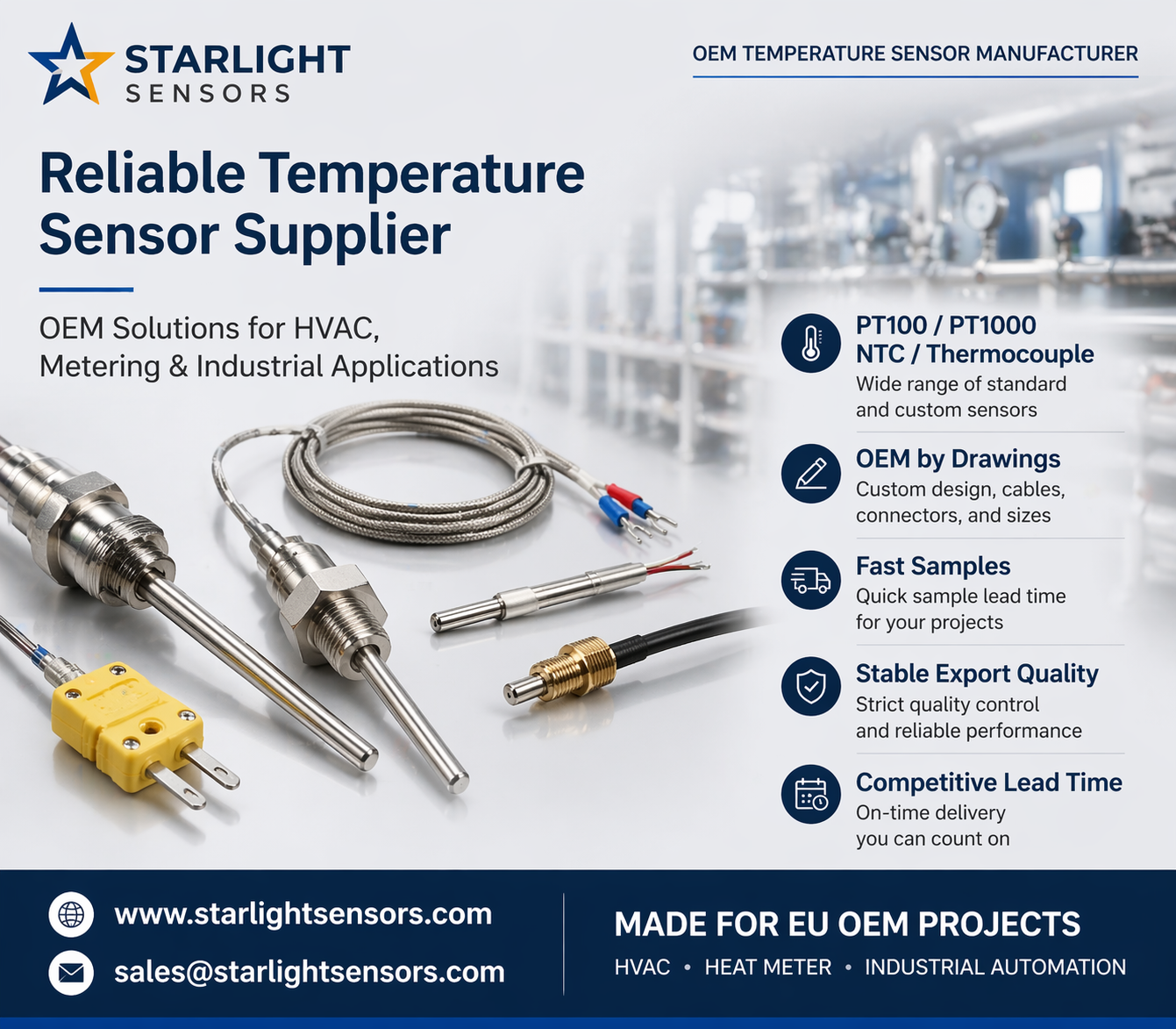
Provide insertion length, sheath diameter and material, tip or junction location, mounting thread or fitting, seal, cable, connector, and lead routing. Check flow-induced vibration, probe support, pressure loading, thermal gradients, and access for removal or replacement. If a thermowell is used, coordinate its dimensions and response with the measurement requirements.
Validate measurement and process fit
Test the assembled sensor and readout in representative liquid and installation conditions. Verify leakage and mechanical fit through the responsible process-design review, and compare readings at defined operating points. Record calibration, inspection, and replacement criteria for service conditions that may cause fouling, corrosion, or drift.
Liquid temperature probe RFQ checklist
- Fluid, temperature/pressure range, flow, chemical exposure, and cleaning conditions.
- Direct immersion or connection/thermowell arrangement and insertion dimensions.
- Sensor element, curve/type, tolerance, controller input, and calibration.
- Wetted materials, sheath, seal, mounting, cable, connector, and removal needs.
- Drawing revision, sample quantity, production volume, inspection, and traceability.
Review temperature probe options
Compare the temperature sensor range, NTC probes, and thermocouple options. Send the fluid, pressure, mounting drawing, and readout details through the OEM contact page for a model-specific review.