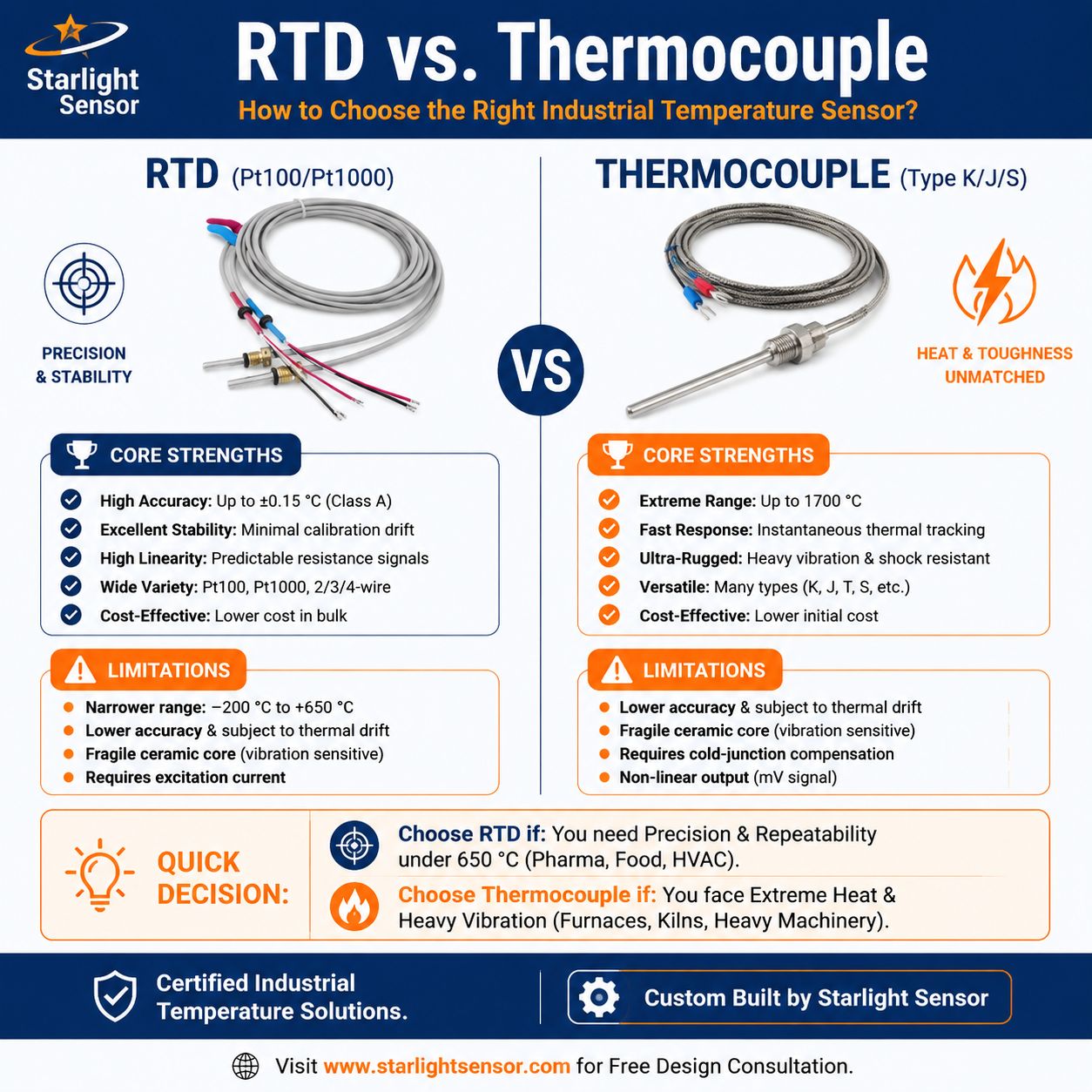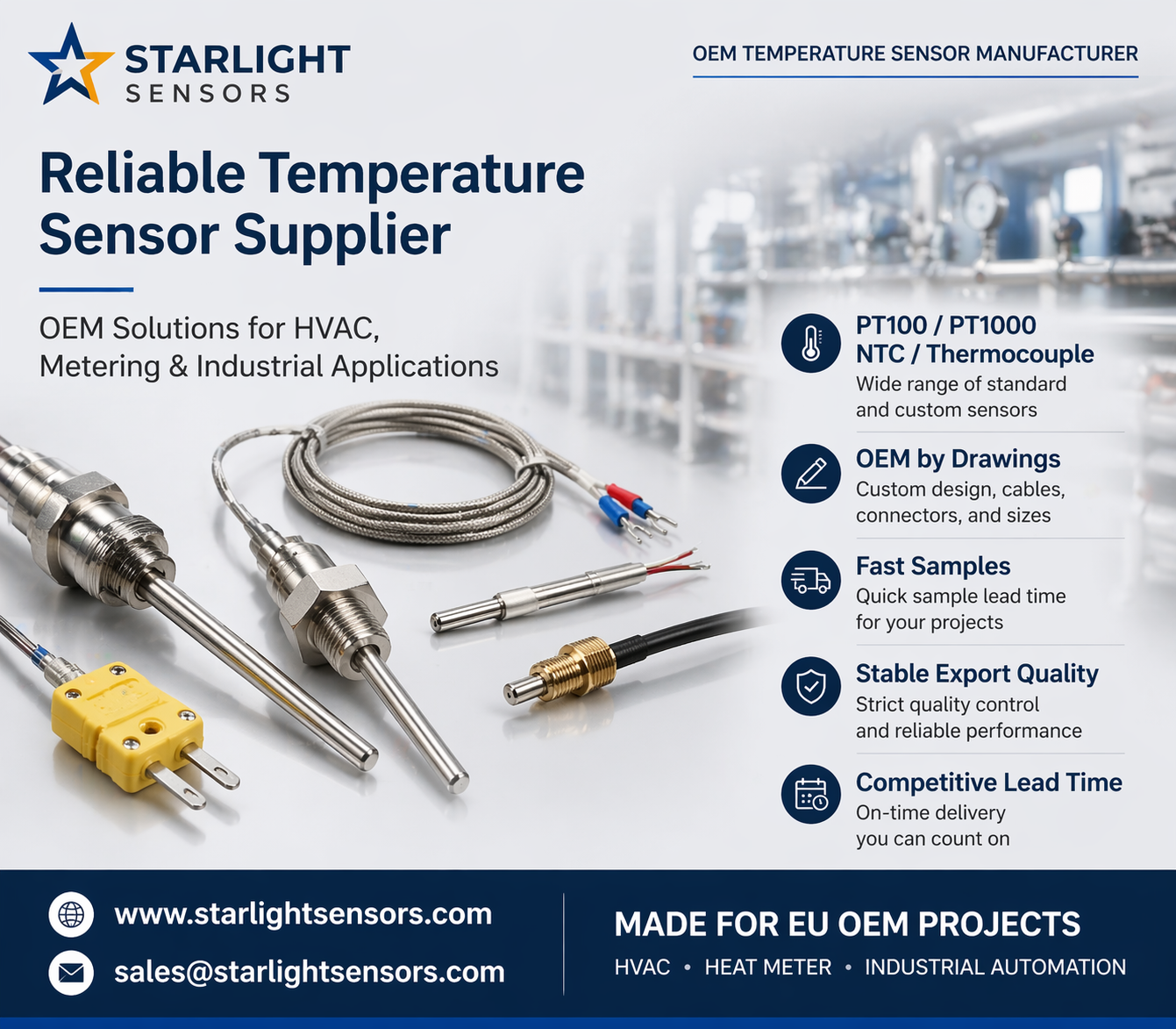
A Type K thermocouple may be considered for an industrial oven when its temperature range, atmosphere, probe construction, and measurement system match the process. The sensor type alone does not guarantee accuracy, uniform heating, energy savings, safety compliance, or remote monitoring. Select and validate the complete measurement assembly for the actual oven.
Define the oven measurement requirement
Record the normal and peak process temperatures, ramp and soak profile, expected cycling, atmosphere, and the location where temperature matters to product quality. Specify the required measurement tolerance and how it will be verified. Chamber air, wall, heating element, and product temperatures can differ, so identify the measurement point before choosing probe dimensions or placement.
Match the probe construction to the installation
For the selected location, confirm the probe diameter, insertion length, sheath material, tip and junction arrangement, mounting method, cable length, connector, and exposure to vibration, abrasion, chemicals, or repeated thermal cycling. The allowable limits depend on the exact construction and supplier documentation. Check that the probe can be installed without interfering with the oven door, fixtures, moving parts, or product path.
Check the thermocouple input and wiring
Confirm that the controller or data-acquisition input is configured for Type K and supports the intended wiring arrangement. Verify polarity, connector type, and compatible extension or compensation cable across the full route. Follow the instrument and sensor documentation for reference-junction compensation, grounding, shielding, and routing. Electrical noise, wiring errors, or a mismatched input configuration can affect the displayed measurement.
Validate the installed measurement
Before relying on readings for process decisions, compare the installed system with a suitable reference at representative operating points. Allow for the oven’s stabilization conditions and measurement location. Record the reference, sensor and instrument configuration, observed deviation, acceptance limits, and any correction or maintenance action. A sensor reading alone does not establish chamber uniformity; map multiple points when the process requires a spatial temperature profile.
Separate measurement from safety functions
A thermocouple provides a measurement signal. It does not by itself provide an independent over-temperature protection function or establish regulatory compliance. Review the oven’s control and protective architecture against the process risk assessment and applicable requirements; use appropriately selected and validated control devices for those functions.
Information for an OEM review
Share the normal and peak temperatures, atmosphere, probe location, diameter and insertion length, sheath and tip preferences, mounting, cable and connector, controller input, cycling conditions, quantity, and any drawing or sample reference. This allows the team to review a suitable assembly without assuming ratings that have not been confirmed.
Request a K-type thermocouple quote, browse the thermocouple sensor range, or read our thermocouple type selection guide. Confirm the ratings of the specific sensor and assembly in its datasheet.