News

Comprehensive Guide to NTC Thermistor Connections

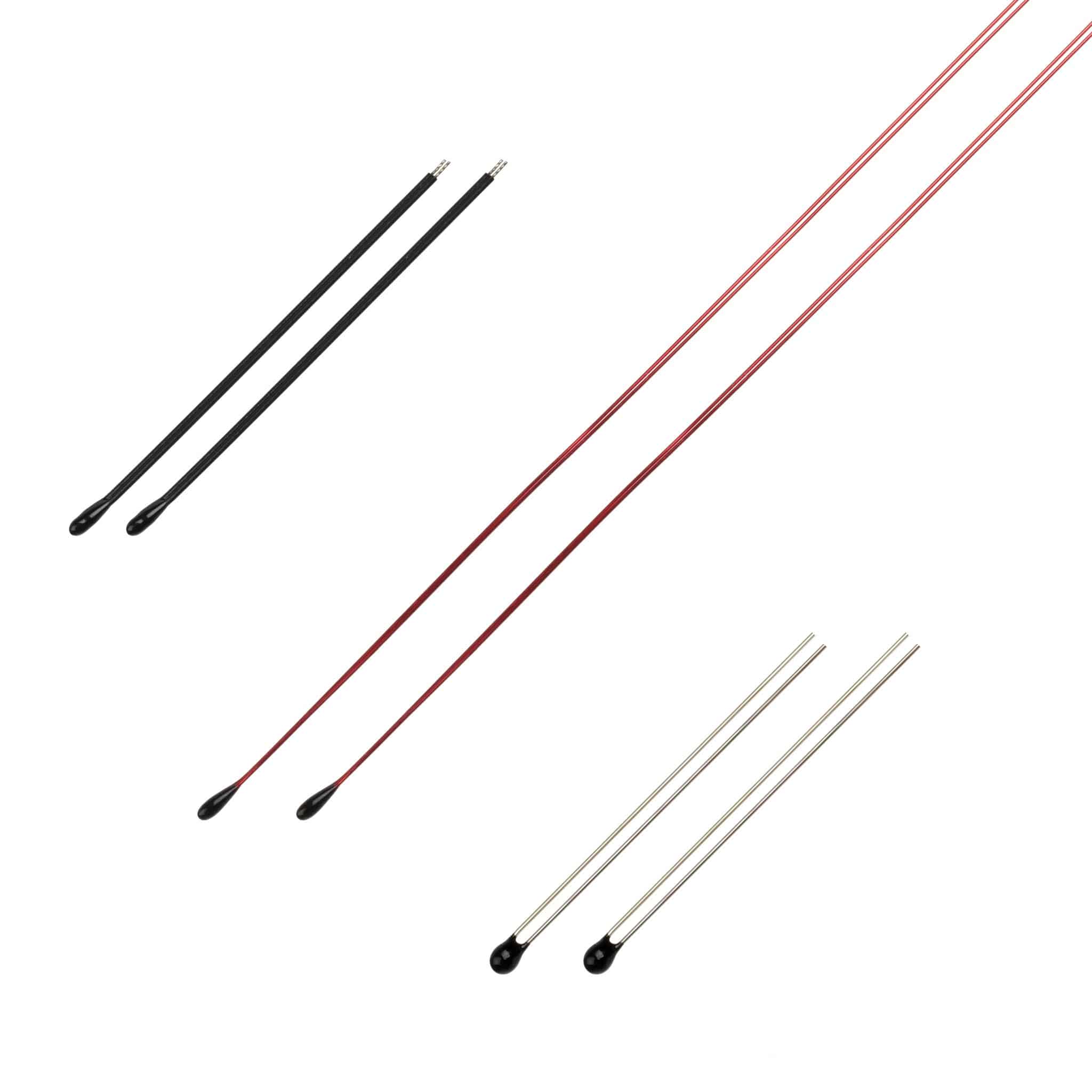
NTC Thermistor Connection – A Comprehensive Guide NTC Thermistor Connection – A Comprehensive Guide Table of Contents Introduction Types of NTC Thermistors Different Connection Configurations Applications and Considerations Introduction Welcome to our comprehensive guide on NTC (Negative Temperature Coefficient) thermistor connections! NTC thermistors are widely used in various industries for temperature sensing and control applications. Understanding how to properly connect NTC thermistors is crucial for accurate temperature measurement and efficient system performance. Types of NTC Thermistors NTC thermistors come in different types and variations. The three main types are: Radial Leaded NTC Thermistors Surface Mount NTC Thermistors Glass Encapsulated NTC
NTC Thermistor HS Code: Classification Guide

NTC Thermistor HS Code: How to Check the Classification There is no single tariff or commodity code that can be safely recommended for every NTC thermistor. Classification depends on the actual goods, how they are presented, the importing market and its current tariff nomenclature. This guide explains how to prepare a classification check; it does not assign a customs code or calculate duties. Introduction Describe the exact goods Why the code matters How to verify classification OEM shipment checklist Describe the Exact Goods Before searching a tariff database, document what is being imported: a bare thermistor element, a discrete component,

NTC Thermistor Color Codes: Identification and Verification

NTC thermistors do not all use one universal color-band system to show resistance. Markings and color conventions can depend on the manufacturer, product family and sensor assembly. Do not apply the standard resistor color code to an NTC part unless its datasheet explicitly says to do so. What a thermistor color code may identify On some products, a color or marking may identify a specific model, tolerance, temperature range or sensor position. Other NTC components have no color bands or visible markings. For example, TDK specifies no marking or color coding for one SMD NTC product family, while color codes

NTC Thermistor Code: How to Verify Markings

How to Verify an NTC Thermistor Code Printed NTC markings and model numbers are not a universal code. The meaning of a character string depends on the manufacturer and part family. This guide shows how to verify an identifier against supplier documentation before using any value in a design. Do not infer a complete R/T curve or product rating from a short marking alone. Introduction What an identifier may contain Verify a code with datasheet data Application and OEM checks Specification checklist What an Identifier May Contain A manufacturer’s part number or surface marking may identify a series, nominal resistance,

NTC Thermistor Circuit Selection: Measurement or Threshold Control

NTC Thermistor Circuit Selection NTC Thermistor Circuit Selection: Measurement or Threshold Control Article Summary Introduction What is an NTC Thermistor? How the NTC Signal Works Choose the Circuit by Its Job Design and Validation Checks Introduction An NTC thermistor can be used in several circuit types, and the right choice depends on what the equipment must do with temperature. Does the controller need a changing temperature value, a simple over-temperature signal, or a resistance input that its firmware already supports? Those are different design goals. Choosing the output first helps avoid building a precise measurement circuit when a threshold is

NTC Thermistor Circuit Diagram: Divider Wiring

NTC Thermistor Circuit Diagram: Divider Wiring Basics This reference focuses on how a measurement NTC, pull-up resistor, supply and ADC node are connected in a simple voltage divider. The wiring direction determines the resistance equation and signal polarity. It is not a substitute for the controller datasheet, sensor R/T data or circuit-level validation. Introduction NTC response and measurement inputs Where divider wiring is used Two common NTC divider orientations Wiring and validation checklist NTC Response and Measurement Inputs An NTC’s resistance generally decreases as its temperature rises. A controller measures the divider voltage and maps the calculated resistance to temperature

2023 Best NTC Temperature Sensor - Starlightsensors

NTC Thermistor Testing: OEM Inspection & Validation

NTC Thermistor Testing for OEM Quality Checks This guide covers basic component checks and acceptance testing for an NTC thermistor or probe assembly. Follow the exact part datasheet and your approved safety procedures. A resistance check can identify some wiring or component faults; it does not certify system accuracy, environmental suitability or product safety. Introduction What to verify before testing Resistance and temperature checks Interpreting faults and results OEM test record What to Verify Before Testing Confirm the part number, nominal resistance and reference temperature, tolerance, R/T curve or stated Beta interval, lead configuration and permitted operating conditions. Use a

NTC Thermistor Characteristics: OEM Selection Guide

NTC Thermistor Characteristics for Component Selection An NTC thermistor is a temperature-dependent resistor whose resistance generally decreases as temperature rises. For OEM selection, the material description alone is not enough: the useful characteristics are the specific part’s resistance-temperature (R/T) curve, tolerances, thermal response and finished probe construction. This guide focuses on interpreting those characteristics and matching them to a measurement system. Introduction Temperature sensing behavior Resistance-temperature curve and tolerances Application and assembly factors OEM specification checklist Temperature Sensing Behavior NTC sensors are commonly measured with a resistance-reading circuit and a controller that converts resistance to temperature. Their response is nonlinear,

NTC Thermistor Calculator: Inputs & Limits

How to Evaluate an NTC Thermistor Calculator A resistance-to-temperature calculator is only as useful as its input curve. This guide explains what to check before relying on an NTC calculation for an OEM design. It is an engineering checklist, not an interactive calculator: no generic tool can identify a thermistor model from “10 kΩ” alone or replace the manufacturer’s data. Introduction Inputs a trustworthy calculation needs What a calculator can and cannot tell you How to use and validate the result Inputs a Trustworthy Calculation Needs Exact sensor identification: part number and supplier revision, not a generic NTC label. Reference

Shopping Cart
Scroll to Top
Scroll to Top