News

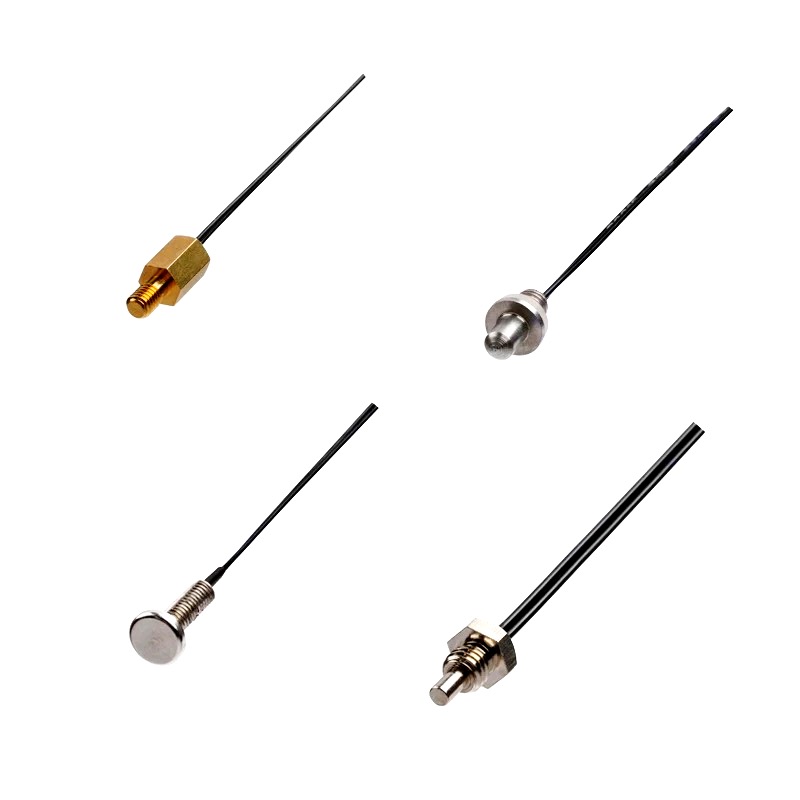
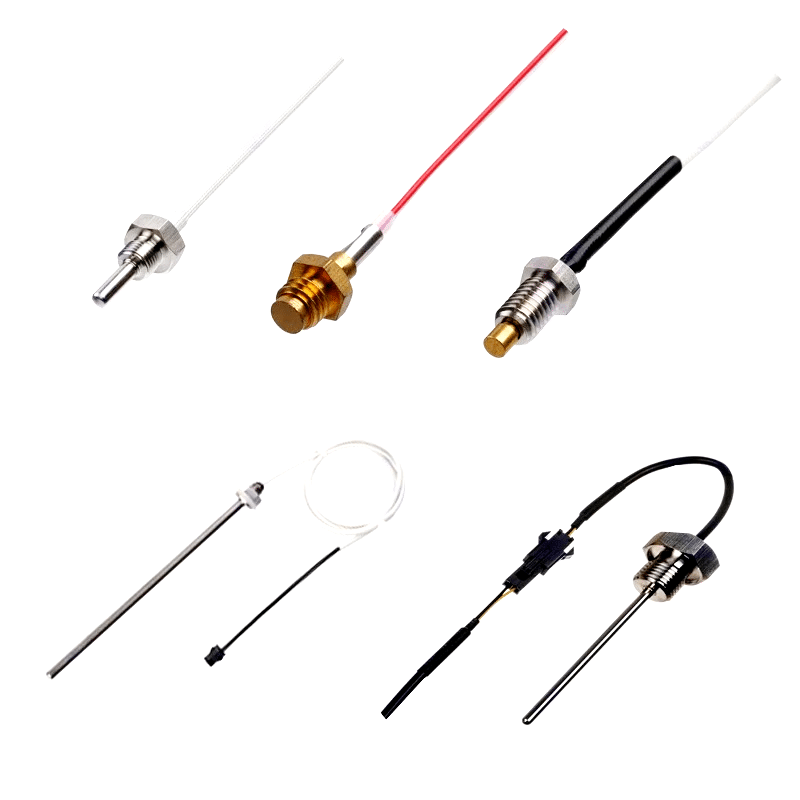
NTC temperature sensor probe assemblies with threaded and spring-loaded housings

NTC Thermistor Applications: A Comprehensive Overview

NTC Thermistor Application – A Comprehensive Guide NTC Thermistor Application – A Comprehensive Guide Abstract This article serves as a comprehensive guide to NTC thermistor applications. It explores the various uses and benefits of NTC thermistors, discussing their importance in temperature sensing and control systems. From industrial applications to consumer electronics, NTC thermistors have found wide usage due to their unique characteristics and reliability. Let’s delve into the world of NTC thermistor application in detail. Table of Contents Temperature Sensing and Control Systems Industrial Applications Consumer Electronics Medical Devices Temperature Sensing and Control Systems NTC thermistors are widely utilized in
NTC Thermistor Calibration: OEM Sensor & System Guide

NTC thermistor calibration can refer to two different tasks: characterizing the sensor’s resistance-temperature relationship, or checking the complete instrumented system that converts a sensor signal into a temperature reading. For OEM designs, define which task is needed from the system error budget and production requirements; an individual calibration is not automatically required for every thermistor. Sensor Curve and System Calibration An NTC thermistor’s resistance changes nonlinearly with temperature. A datasheet may provide a nominal R/T table, a beta value for a defined interval, or curve coefficients for a particular model. Using these data is different from calibrating an assembled product.

NTC Thermistor Circuit Design: Divider, ADC & Calibration

An NTC thermistor changes resistance as its temperature changes, but an ADC reads voltage or current. A practical NTC thermistor circuit therefore has to translate resistance into a measurable signal, convert that signal using the correct sensor curve, and control measurement error across the intended operating range. This guide covers the common voltage-divider approach and the checks that matter in an OEM design. Introduction Start with the application’s temperature span, response needs, allowable system error, controller input and installation. A schematic alone does not determine accuracy: the selected thermistor’s resistance-temperature data, reference resistor, ADC, wiring, thermal contact, excitation power and

Amphenol NTC Thermistors: The Ultimate Guide

NTC Thermistor Amphenol – The Ultimate Guide NTC Thermistor Amphenol – The Ultimate Guide Summary: Introduction Section 1: What is an NTC Thermistor? Section 2: Amphenol NTC Thermistors Section 3: Applications of NTC Thermistors Section 4: Advantages and Disadvantages Conclusion Introduction Welcome to the ultimate guide on NTC Thermistors by Amphenol! In this guide, we will explore the world of NTC thermistors and how Amphenol, a leading manufacturer, designs and produces top-quality NTC thermistors for various applications. Whether you are an engineer, hobbyist, or simply curious about this technology, this guide is here to provide you with valuable insights. Section

Finding High-Quality NTC Thermistors on Amazon

ntc thermistor amazon – The Best Place to Find NTC Thermistors Online Article Summary Introduction What is an NTC Thermistor? Where to Buy NTC Thermistors on Amazon Choosing the Right NTC Thermistor Conclusion ntc thermistor amazon – The Best Place to Find NTC Thermistors Online Introduction Are you in need of high-quality NTC thermistors for your electronic projects? Look no further! In this article, we will guide you through the process of finding and purchasing the perfect NTC thermistor on Amazon. What is an NTC Thermistor? Before we dive into the world of online shopping, let’s understand what exactly an

NTC Thermistor Alternatives: How to Choose the Right Sensor

Choosing an alternative to an NTC thermistor starts with the measurement job. NTC thermistors, PTC devices, resistance temperature detectors (RTDs) and thermocouples work differently, so none is universally more accurate or better. Compare the complete sensing system: required temperature span, allowable measurement uncertainty, mounting, response, lead length, readout electronics and calibration plan. Understanding NTC Thermistors An NTC thermistor has a resistance that decreases as temperature rises. It can provide a sensitive, compact temperature measurement over a designed operating interval and is widely used for sensing, control and compensation. Its resistance-temperature curve is nonlinear, so the selected part must be matched

Air Conditioner NTC Thermistors: Sensor Positions & OEM Selection

In this guide How NTC feedback supports air-conditioner control How an NTC thermistor works Typical sensor locations and roles Selection limits and verification OEM specification checklist How NTC feedback supports air-conditioner control Air conditioners use temperature feedback to inform control decisions. Depending on the model, a controller may use room-air, heat-exchanger, outdoor-air or refrigerant-pipe temperature measurements to manage operation and detect faults. An NTC thermistor can provide one of these inputs, but the sensor by itself does not determine cooling capacity or prove an energy saving. Whole-system performance also depends on the controller, refrigeration circuit, airflow, installation and operating conditions.

NTC Thermistor Aging & Resistance Drift: OEM Guide

In this guide What NTC thermistor aging means What can cause resistance drift How OEMs evaluate and manage stability Specification checklist What NTC thermistor aging means NTC aging is a time-dependent, usually irreversible change in a component’s electrical characteristics. It may affect resistance at the rated temperature (R25), the B value, or the measured resistance–temperature (R/T) curve. Aging does not produce an identical shift in every thermistor: the magnitude and direction depend on the material, construction, process history and conditions of use. TDK’s NTC technical information describes commonly observed resistance increases and B-value changes, and discusses mechanisms including thermal stress,

NTC temperature sensor probe assemblies with threaded and spring-loaded housings

NTC Thermistor Advantages and Disadvantages: OEM Guide

In this guide Where NTC thermistors have an advantage Trade-offs to consider When an NTC is a good fit NTC thermistors are often described as sensitive, compact and low-cost, but those labels do not guarantee a suitable measurement. The practical result depends on the exact R/T curve, circuit, package, mounting and operating environment. This guide compares the engineering benefits and limitations so OEM teams can decide what to verify before choosing a part. Where NTC thermistors have an advantage Strong resistance change over a temperature interval An NTC’s resistance falls as its temperature rises. This provides a measurable signal for

Shopping Cart
Scroll to Top
Scroll to Top