Choosing an RTD sensor supplier involves more than comparing unit prices or reading a general “quality” claim. OEM teams need evidence that a proposed assembly matches the drawing, electrical interface, operating environment, and required inspection plan. The evidence should be specific to the supplier, product family, and order under review.
This guide outlines practical questions for evaluating an RTD sensor supplier during sourcing and technical review. It does not certify any supplier or establish that a particular sensor meets your requirements; verify claims and documentation directly.
Check the technical fit first
Share the sensing location, temperature conditions, process medium, installation constraints, controller input, RTD element and curve, wiring arrangement, sheath dimensions, cable, termination, and quantity. Ask the supplier to identify assumptions, deviations, and open design points in writing. A technically clear response is more useful than a broad promise of precision or reliability.
Confirm that the quotation and drawing identify the same configuration. Pay attention to nominal resistance and reference temperature, tolerance class or acceptance limits, lead configuration, materials, insertion length, mounting interface, connector pinout, and drawing revision. Check that the proposed item is appropriate for the actual pressure, moisture, chemical exposure, vibration, and cycling conditions.
Request evidence matched to the order
Agree which records are required for the application and what each record covers. Depending on the risk and quality system, an OEM may request some combination of:
- controlled drawing and revision history for the quoted assembly;
- inspection results for dimensions and electrical characteristics;
- calibration data with reference points, method, equipment, and uncertainty where calibration is specified;
- material or component identification when traceability is required;
- lot or serial identification and a process for handling nonconforming items;
- change notification and approval rules for materials, construction, process, or site changes.
Do not assume that a certificate, accreditation logo, or management-system document covers every sensor, process, location, or shipment. Check its issuer, scope, site, validity, and relevance; define product acceptance separately in the purchase specification.
Review manufacturing and change control
Ask how the supplier controls incoming components, assembly instructions, calibration or inspection steps, final release, and records. The level of detail should match the project risk and purchasing agreement. Discuss how a drawing revision is implemented, how substitutions are approved, and how the supplier communicates deviations or discontinuation.
For a new design, use a sample or first-article stage with written acceptance criteria. Confirm fit, wiring, resistance at agreed points, labels, installation, and system behavior as relevant. Then define how production orders will reference the approved drawing and sample status. An inspection report is useful only when it is linked to a defined requirement and identifiable product.
Evaluate support and project communication
During technical review, note whether responses address the actual application, explain limitations, and identify missing information. Clarify the owner for engineering questions, expected review milestones, order changes, nonconformance handling, and after-delivery documentation. Avoid treating a general response-time or customization promise as a binding commitment unless it appears in the agreed commercial documents.
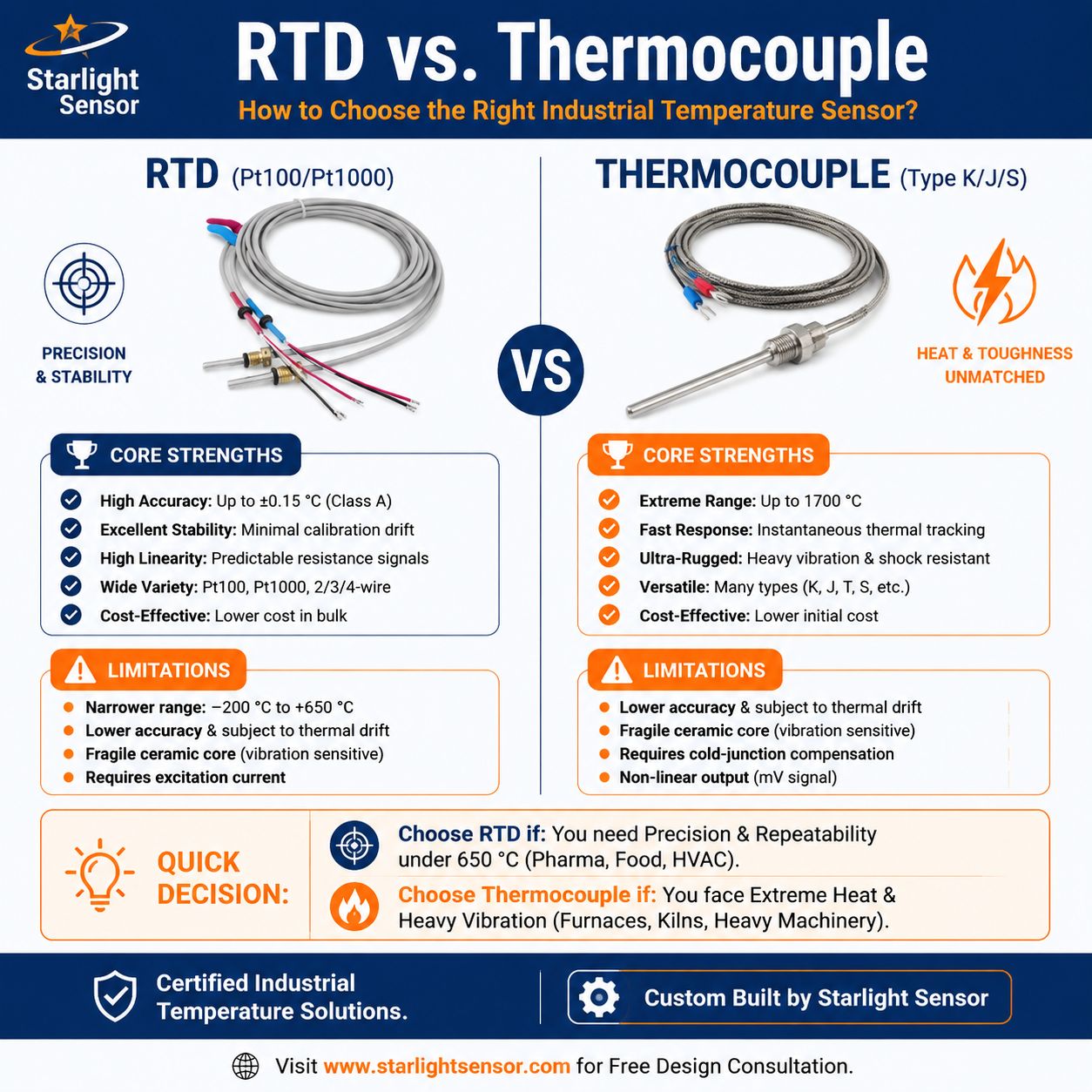
The retained image below is illustrative and is not evidence of a specific factory, certification, process, or inspection capability.

Supplier review checklist
- Does the quote identify the exact element, curve, tolerance, wiring, dimensions, material, and termination?
- Are assumptions and deviations listed and approved before production?
- Are inspection, calibration, traceability, and record requirements defined for this order?
- Is there a clear route for drawing changes, substitutions, defects, and corrective action?
- Can the proposed sample be evaluated in the intended installation before release?
For a project-specific specification, compare the RTD sensor assembly range and the two-wire and three-wire RTD example. Our custom RTD project checklist covers the information to provide at RFQ stage. Send your drawing and requirements to begin a technical review.