An outdoor temperature sensor used for ambient-air measurement is more than a sensing element in a housing. The measurement depends on the sensor, radiation shield, airflow, mounting location, cable, controller input, and local environment. This guide focuses on OEM sensor and probe selection; it does not imply that a probe includes a weather station, wireless link, logger, or monitoring platform.
Choose a representative outdoor measurement location
Shield the sensing element from direct solar heating and precipitation while allowing representative air to circulate. Avoid nearby exhausts, air-conditioning outlets, roofs, walls, pavement, and other surfaces that can bias the reading unless the project is intended to measure that microclimate. The U.S. National Weather Service describes siting and ventilation considerations for temperature sensors; the NWS instrumentation siting guidance is a useful reference. Actual placement should follow the project’s measurement standard and site conditions.
Match the sensor and controller
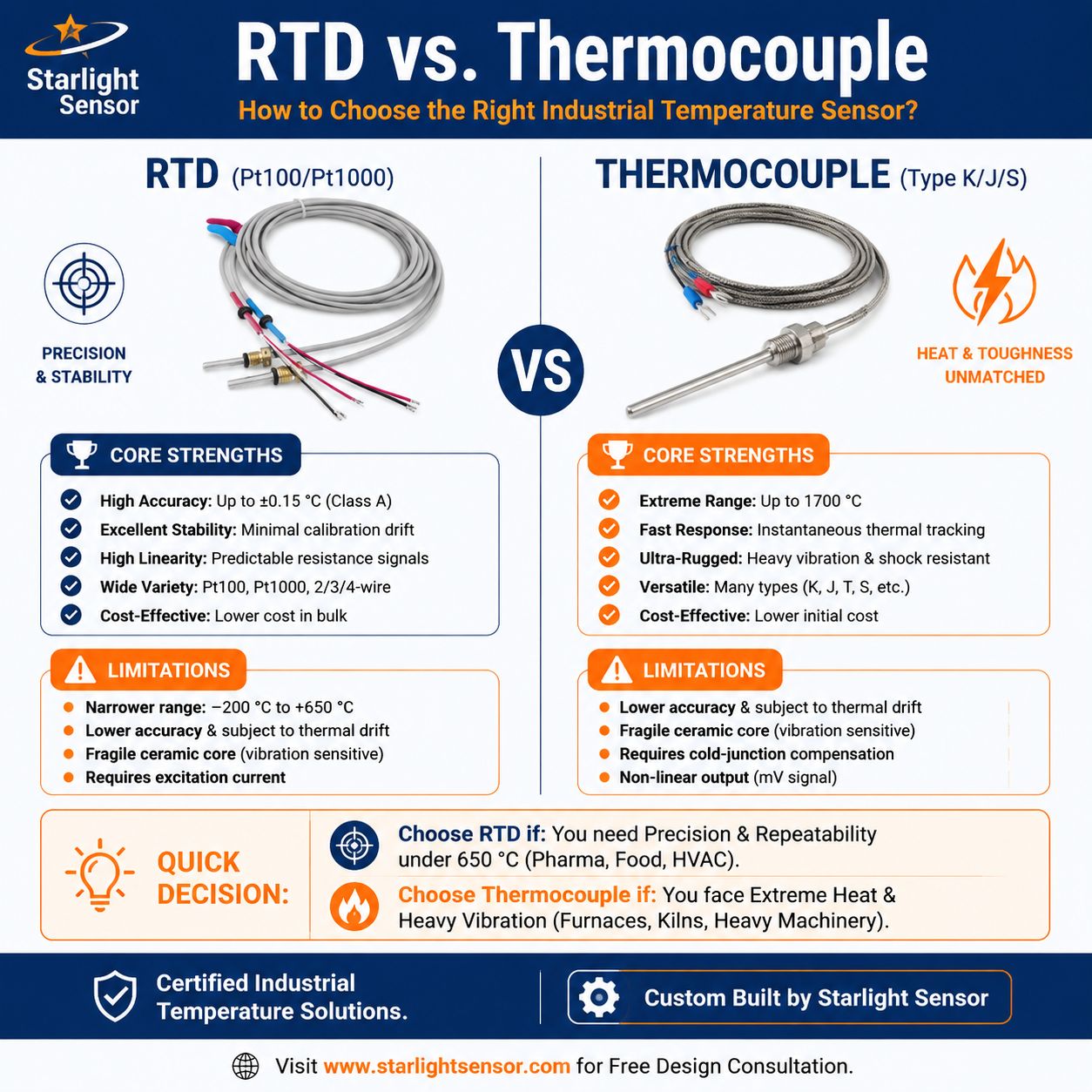
Define whether the design uses an NTC thermistor, RTD, thermocouple, or digital probe, then confirm the controller input, curve, tolerance, wiring, supply, and conversion method. Specify the required measurement range, system error budget, response, and calibration or verification plan. The installed performance depends on the complete system, not only the sensing element.
Specify weather exposure and probe construction
Document the mounting, radiation shield or enclosure, probe dimensions, cable and connector, strain relief, and service access. Identify exposure to UV, rain, condensation, dust, salt, chemicals, freeze-thaw cycles, and wind-driven debris. Do not assume that a “waterproof” label alone confirms suitability for continuous outdoor exposure; verify the exact assembly and installation limits.
Outdoor temperature sensor RFQ checklist
- Measurement type and location, site standard, and local environmental conditions.
- Sensor element, curve/tolerance, controller interface, range, and accuracy target.
- Shield/enclosure, airflow, mounting dimensions, cable, connector, and routing.
- Calibration, response, sampling, maintenance, and inspection requirements.
- Drawing revision, sample quantity, production volume, and destination.
Review outdoor probe options
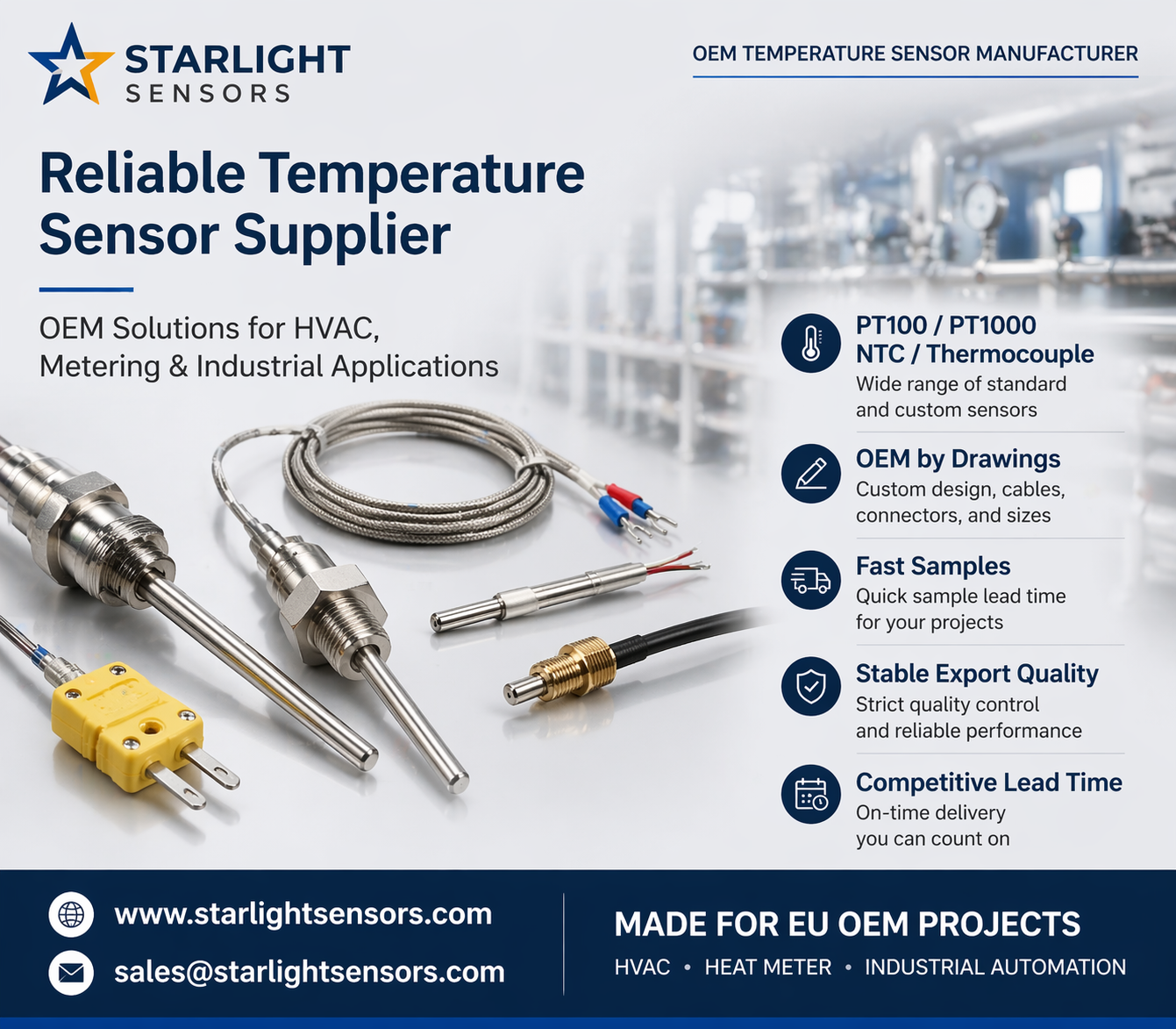
Explore Starlight’s NTC thermistor and probe range and RTD temperature sensor range. Confirm the selected model’s construction and environmental suitability against its current documentation. For a custom outdoor assembly, share the location, controller, and exposure requirements for an OEM review.