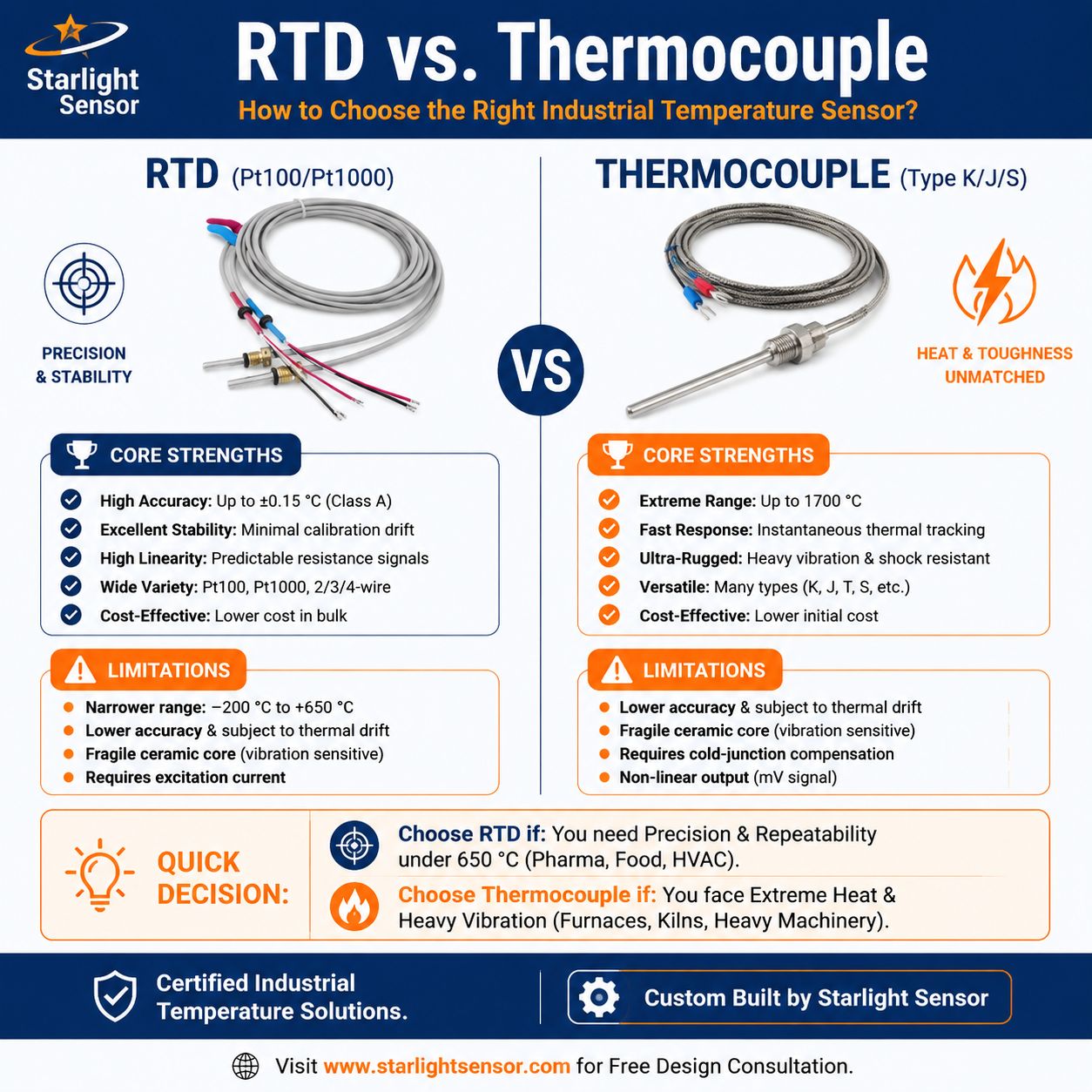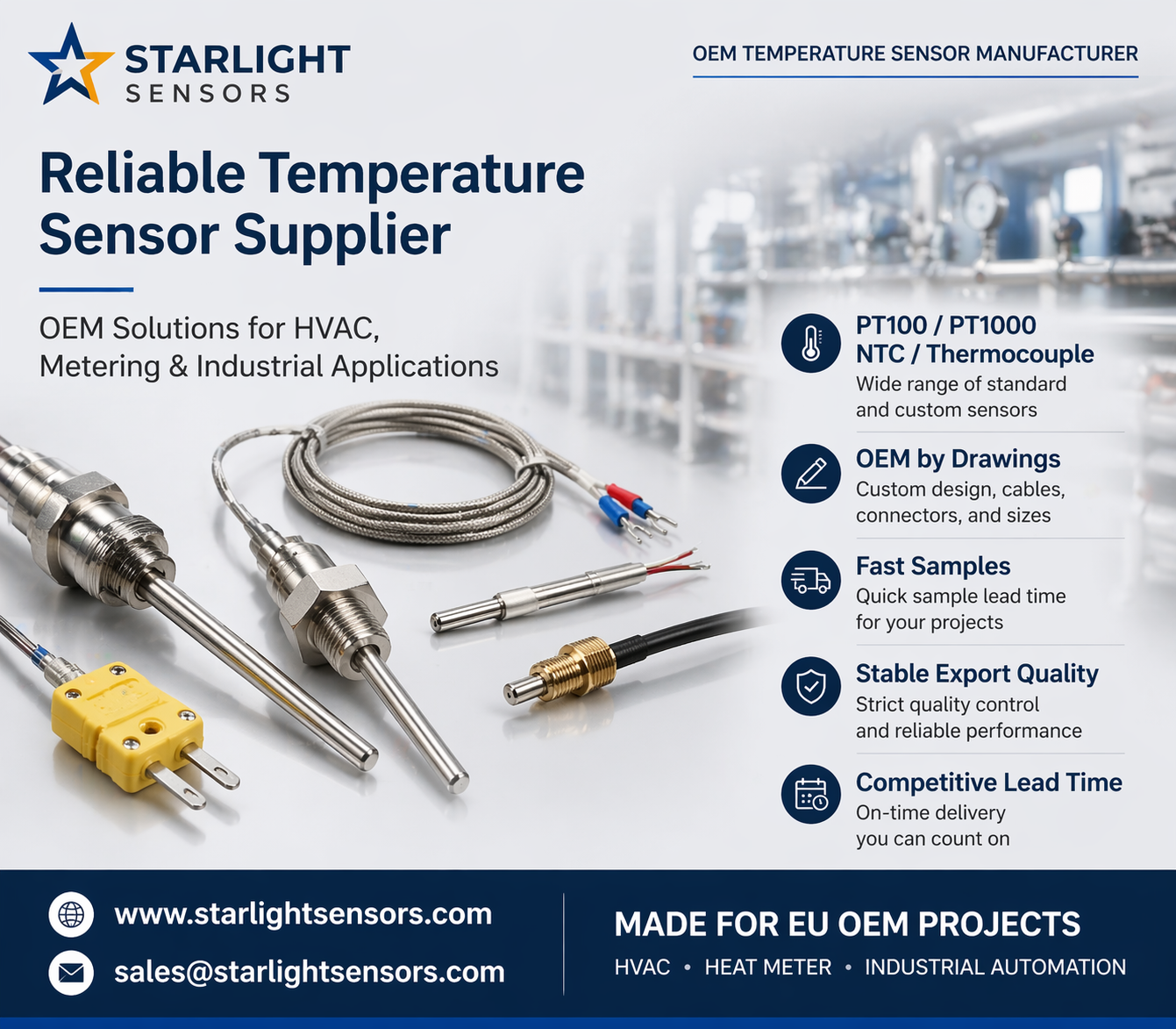
Pt100 is a platinum resistance temperature detector (RTD) with a nominal resistance of 100 Ω at 0 °C under the applicable sensor convention. For a probe purchase, the Pt100 element is only one part of the assembly. Probe geometry, wiring, sheath, mounting, lead cable, and the receiving instrument all affect whether the sensor fits the application.
Specify the Pt100 element
State the required element and applicable resistance-temperature curve/standard, tolerance class, temperature range, and calibration or inspection documentation. Avoid selecting a probe solely because it is labeled “Pt100”: the exact tolerance, operating limits, and performance depend on the part and finished assembly.
Choose the probe construction and mounting
Define probe diameter and length, sheath material, tip geometry, process connection, insertion depth, immersion or contact point, and mechanical clearance. For liquid or process installation, provide pressure, flow, vibration, and medium conditions; for surface sensing, provide the target material, curvature, contact method, and thermal insulation. Probe dimensions should place the element at the intended measurement point without interfering with a well, fitting, or enclosure.
Match the lead configuration to the readout
Specify two-, three-, or four-wire construction, lead length, cable insulation, connector, routing, and the supported instrument input. Lead resistance and wiring method can affect the measurement. Confirm the receiving instrument’s wiring and configuration rather than assuming any Pt100 connection will work with any controller. See our Pt100 sensor and transmitter compatibility guide for the separate signal-chain considerations.
Analog Devices’ RTD system design guide discusses sensor and circuit tradeoffs. The final result depends on the probe, wiring, excitation, instrument, mounting, and calibration together.
Pt100 probe RFQ checklist
- Element tolerance/class, curve/standard, range, and test/certificate requirement.
- Probe diameter/length, sheath, tip, process connection, insertion depth, and mounting drawing.
- Wire count, cable length and jacket, connector, routing, and receiving instrument model.
- Process medium, pressure, flow, vibration, thermal cycling, moisture, and cleaning conditions.
- Quantity, prototype/sample, drawing revision, inspection, packaging, and delivery timing.
Request a Pt100 sensor assembly
Review our RTD temperature sensor range and send your drawing or sample, process conditions, wiring, and controller details through our OEM inquiry page. We can confirm the offered probe construction and interface against the application requirements.