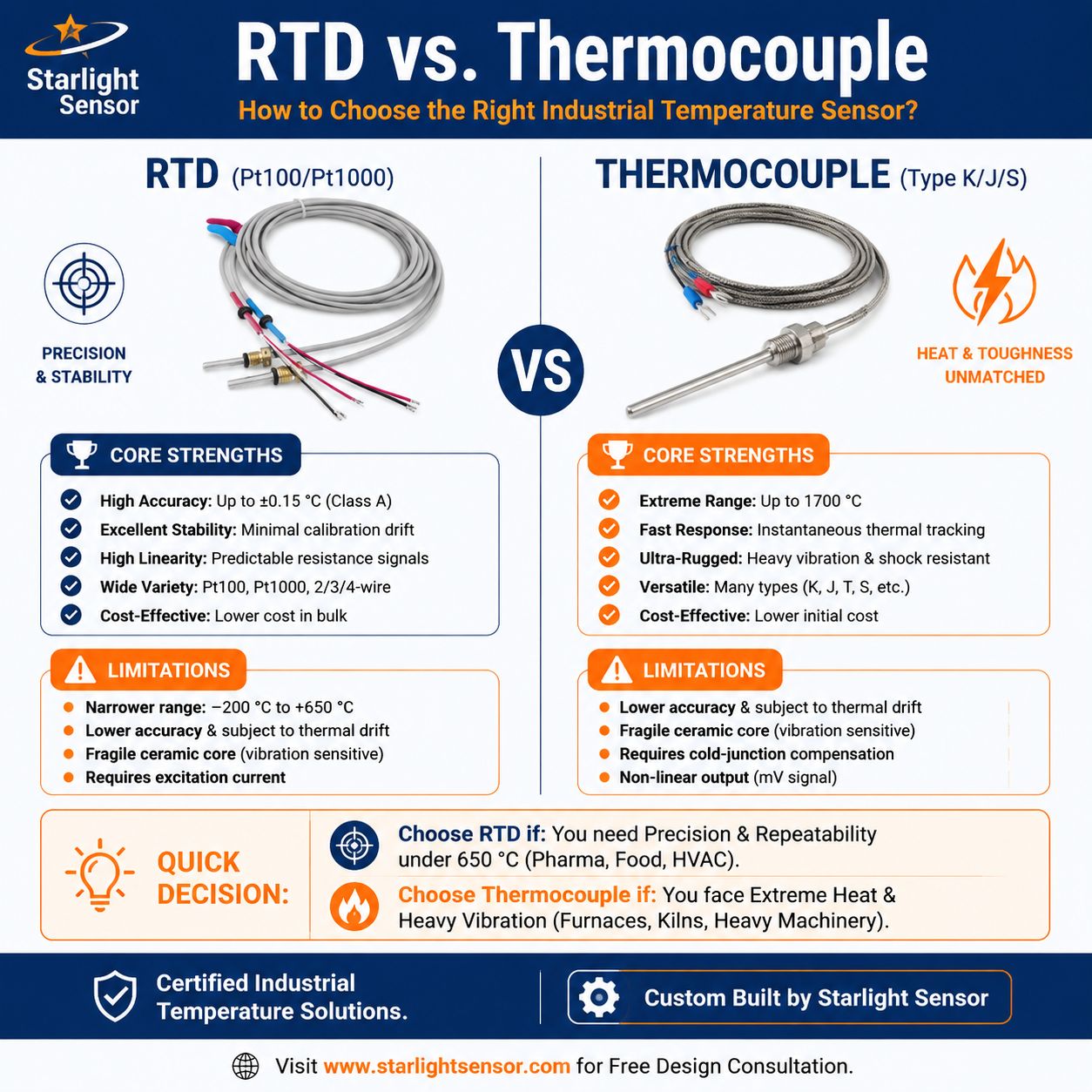
Thermoplastic elastomer (TPE) is a material that may be used for cable insulation, flexible jackets or molded parts in a temperature-sensor assembly. It is not a sensing technology by itself: the sensing element (for example, an NTC thermistor or RTD), probe construction, wiring and readout determine how the assembly measures temperature. Whether a TPE component is suitable depends on its specific grade and the complete sensor design.
Where TPE may fit in a sensor assembly
A flexible TPE jacket or overmold can help meet mechanical and environmental design needs. Automotive, industrial, refrigeration and medical-device projects each have different exposure, cleaning, temperature, electrical and regulatory requirements. Do not assume that a generic TPE material is oil-resistant, biocompatible, waterproof or suitable for a particular temperature range. Those claims must be supported by documentation for the selected material and finished assembly.
Automotive and industrial design checks
For automotive or industrial use, specify the actual fluid or chemical exposure, vibration, abrasion, routing and bend requirements. Ask the supplier to identify the TPE grade and provide relevant compatibility data. Confirm that the sensor element, probe sheath, cable, connector and joint seals are all suitable for the same operating environment. A jacket material alone does not establish the temperature range or accuracy of the sensor.
Refrigeration and moisture exposure
For cold rooms, freezers or refrigeration equipment, describe condensation, washdown and cable-entry conditions. State the required ingress-protection level for the complete assembly and verify it against the product documentation and test method. Temperature range, response time and measurement accuracy depend on the sensor design, installation and controller as well as the insulation material.
Medical-device programs
Medical applications require a documented review of the intended contact, cleaning or sterilization process, applicable material requirements and regulatory pathway. Do not infer biocompatibility or patient-contact suitability from the term TPE. Confirm the exact grade, finished construction and supporting compliance evidence with the supplier and the responsible regulatory team.
Information to include in an OEM inquiry
- Application and required temperature range, accuracy and response time.
- Sensing element and controller input, if already defined.
- Probe dimensions, mounting, cable length, connector and bend or strain-relief needs.
- Exposure to fluids, chemicals, moisture, cleaning agents, vibration or abrasion.
- Required sealing or ingress-protection level and the test conditions used to verify it.
- Target quantity, drawing or sample reference, and any material-compliance documentation needed.
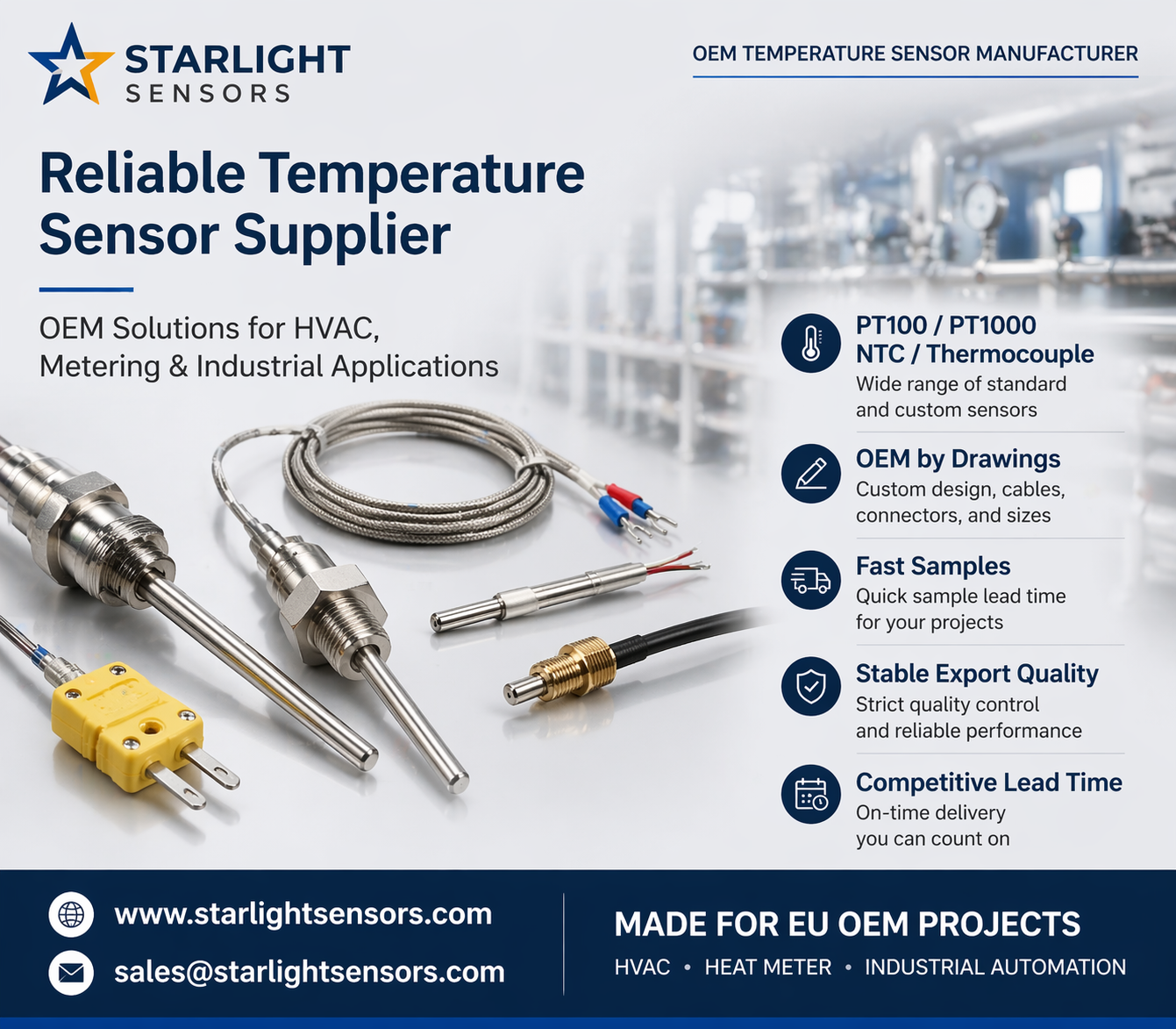
For an OEM evaluation, review the documented TPE IP67 NTC temperature sensor and confirm the exact assembly requirements with the supplier. You can also request a sensor review or quotation. Confirm that any requested performance or compliance requirement is available for the selected configuration before approval.
Summary
TPE can be one material choice within a temperature-sensor assembly, but it does not define the sensing principle or prove the finished product’s performance. Specify the use conditions and verify material, sensor and assembly documentation together before production release.