The marking MF71 8D-10 is not enough on its own to identify a complete NTC thermistor specification or confirm that a component is a temperature-measuring probe. Before using or replacing a part, verify the full manufacturer name and part number against its datasheet and the circuit or equipment documentation.
What an NTC marking can—and cannot—tell you
An NTC thermistor generally has lower resistance as its temperature rises. That operating principle does not define the exact device. Similar-looking NTC components may be designed for measurement, temperature compensation, or circuit protection, and they can have very different electrical ratings and assemblies.
Without a verified manufacturer document for the exact MF71 8D-10 marking, do not infer nominal resistance, reference temperature, R/T curve, Beta value, tolerance, current rating, disc dimensions, response time, operating range, or intended application. A generic code or an online listing for a similar designation is not proof of equivalence.


Identify the circuit role before choosing a replacement
- Record the full marking, manufacturer logo, equipment model, board reference, location, and how the component is connected.
- Use the manufacturer datasheet or equipment service document to determine whether the component is intended for temperature measurement, compensation, or another circuit function.
- For temperature sensing, verify the reference resistance and temperature, full R/T curve, tolerance, probe or package construction, and controller input.
- For circuit protection, verify the exact electrical ratings and application limits in the manufacturer’s document; do not substitute a sensing probe based on appearance or a similar NTC label.
- Test only under the equipment maker’s safe service procedure. Isolate the component before resistance checks and avoid live mains circuits; use a qualified technician where required.

OEM sourcing checklist
For a replacement or new design, provide the exact part marking and datasheet, circuit function, required resistance or ratings, operating environment, mounting and package dimensions, wire/connector details, drawing or sample, and quantity. If the component identity is uncertain, state that before requesting a quotation so compatibility can be verified.
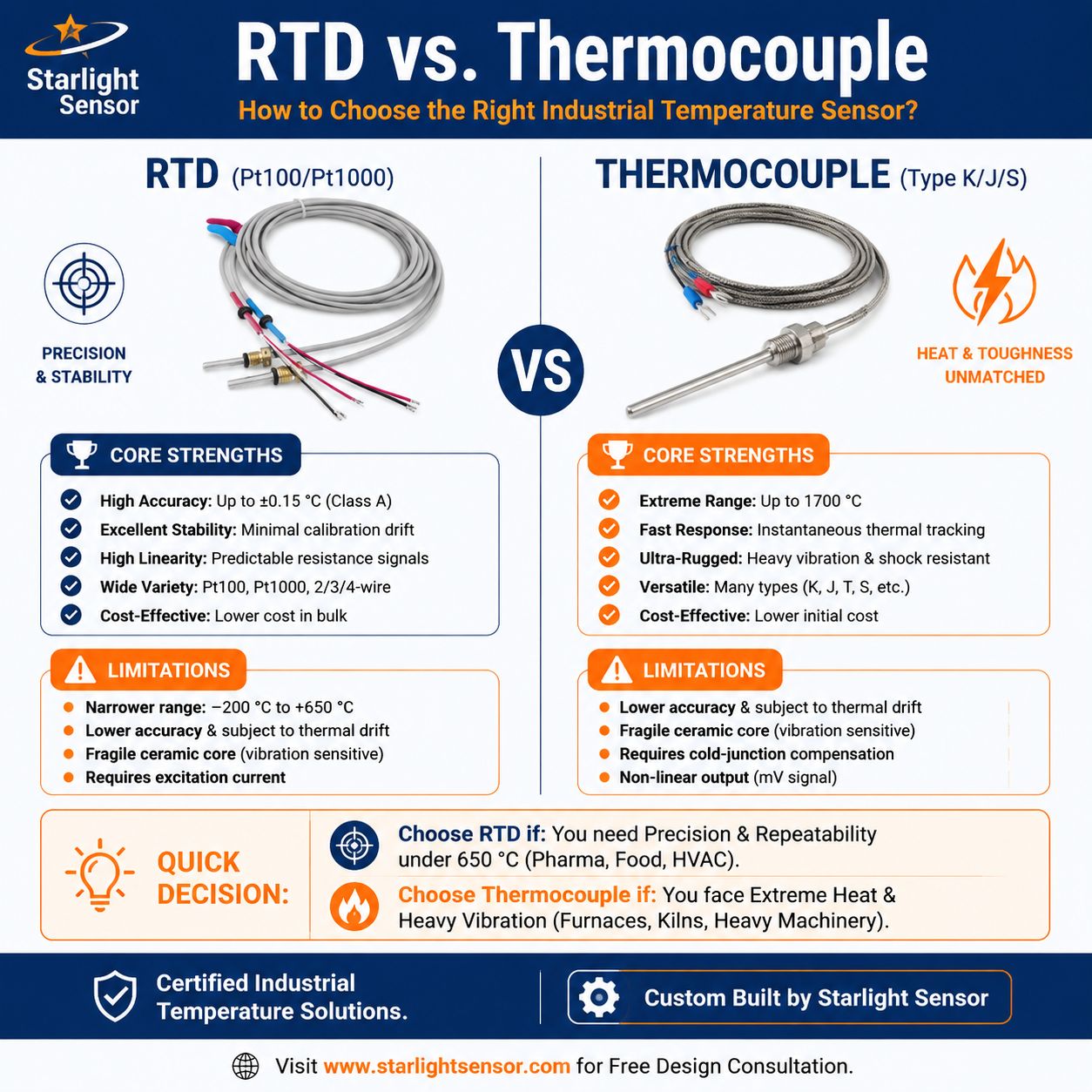
For temperature-sensing applications, compare available NTC sensor categories, review the NTC resistance-temperature curve guide, or discuss a custom NTC probe assembly. The marking alone does not confirm that Starlight supplies an MF71 8D-10 equivalent; use the OEM quote form with the required documentation.

Key takeaway
Use a manufacturer datasheet and the equipment’s circuit documentation to identify what MF71 8D-10 means in the specific application. Do not rely on the code alone for ratings, intended function, performance, or replacement compatibility.